



Problem statement and scope
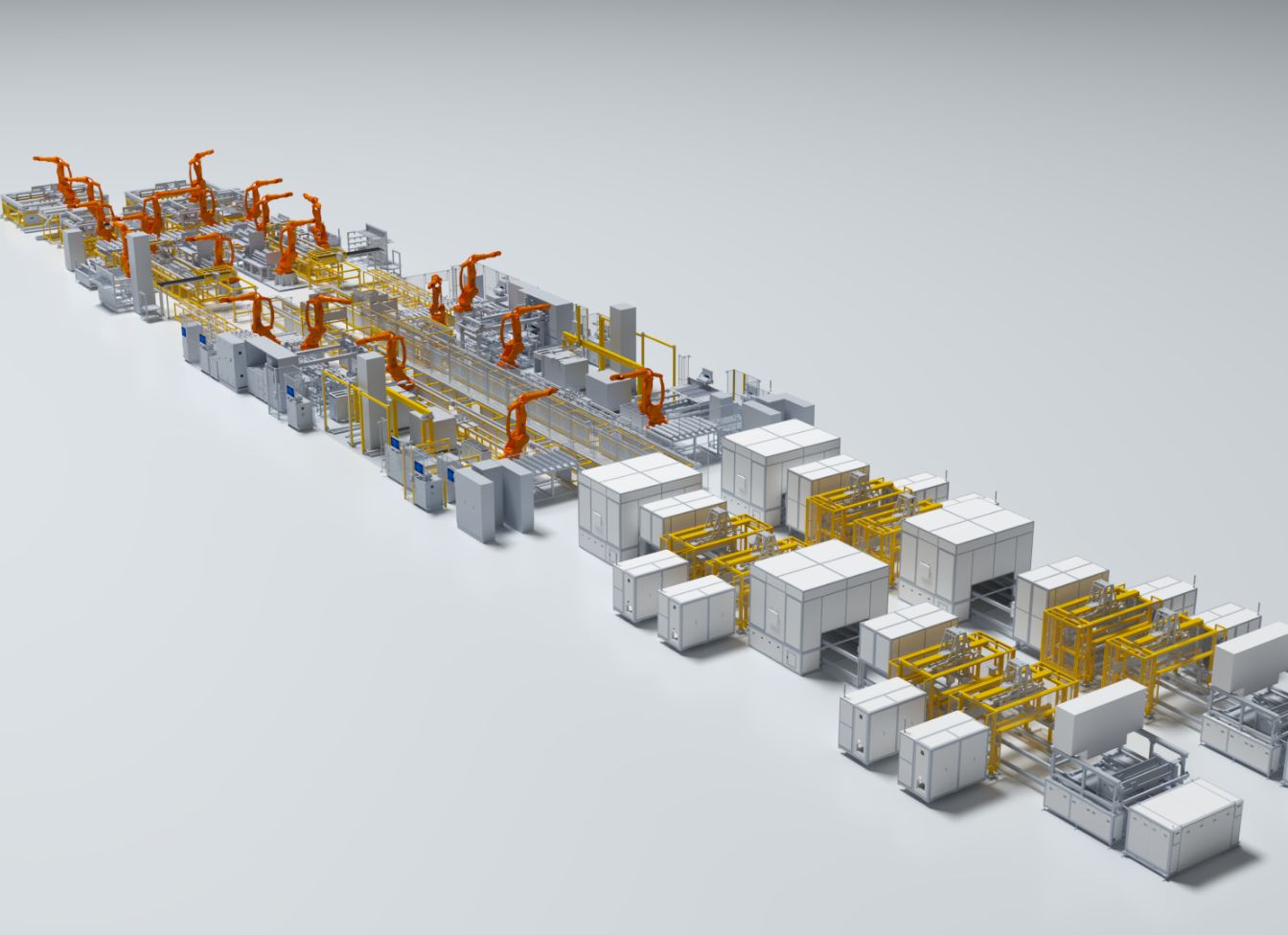
Manufacturers often invest heavily in automation for blade-format battery production without resolving the underlying decision faults; that mismatch causes persistent delays and cost overruns. A measured diagnosis of the procurement and engineering choices prevents such outcomes. Early on, teams must align line design with product geometry and process variation; an early reference I use when teaching line design is the blade battery assembly line, which illustrates how tooling rigidity and poor specification setpoints are recurrent sources of failure.

Primary selection mistakes (problem-driven analysis)
The following mistakes recur across projects. Each entry states the error, the specific consequence, and a concise corrective principle.
– Over‑specifying for peak capacity: purchasers buy equipment sized for theoretical maximum throughput; consequence — idle capital and fragile takt times. Corrective principle: size for realistic 80th percentile demand and modular scalability. – Ignoring cell-to-cell tolerances: planners assume perfect pouch/prismatic uniformity; consequence — high scrap and rework at assembly. Corrective principle: require adaptive fixturing and in-line measurement. – Treating software as commodity: control systems are accepted as off-the-shelf black boxes; consequence — integration delays and undocumented logic. Corrective principle: demand open APIs and documented state machines. – Neglecting human factors: ergonomics and operator workflows become afterthoughts; consequence — quality drift and frequent stoppages. Corrective principle: verify HMI flows and maintenance access during FAT. – Overlooking materials handling: upstream and downstream transport are left to general conveyors; consequence — misfeeds, damages, and cycle inefficiency. Corrective principle: specify part-specific conveyance and soft-handling where needed.
Root causes behind repeated mistakes
Problems originate in three systemic gaps. First, procurement separates budget targets from engineering validation; contracts reward price rather than defined outcomes. Second, testing is often document-heavy but scenario-light: factory acceptance tests exercise only nominal conditions. Third, knowledge transfer between cell designers and automation integrators is shallow; assumptions about tolerances and adhesives remain implicit. Addressing these gaps requires procedural change rather than marginal technical tweaks.
Concrete avoidance measures and decision checklist
Use this concise checklist during supplier evaluation and internal sign‑offs. Each item is directly actionable.
– Define target product family and a controlled range of tolerances; include tooling changeover time limits. – Require supplier proposals to include cycle-time breakdown, failure-mode frequency, and recovery procedures. – Insist on modular cell stations with clear electrical and pneumatic interfaces. – Specify software deliverables: API docs, simulation models, and deterministic rollback procedures. – Build human-in-the-loop acceptance: ergonomics test, noise levels, and one‑operator recovery drills. – Reserve budget for a 6‑week on-site commissioning window and measurable KPIs for the warranty period.
Evaluation metrics and pilot strategy
Measure readiness with objective indicators rather than subjective impressions. Key metrics: first-pass yield (%), mean time to recover (MTTR) from a line fault, mean time between failures (MTBF) for tooling, and process capability (Cpk) for critical dimensions. Implement a pilot cell that runs representative batches with controlled variation; validate metrics before expanding the footprint. Pilot outcomes should gate financial draws and integration milestones.
Supplier assessment: questions to ask and evidence to request
Ask for evidence, not assurances. Request schematic block diagrams of control architecture, sample HMI flows, and recorded fault logs from analogous lines. Confirm whether the integrator supplies on‑site training and spare parts kits sized to realistic downtimes. Where physical reference matters, visit a manufacturer’s demonstration line or request video runs under variable conditions. When assessing specific vendors, include direct inquiries into how they manage variant changeovers and adhesive cure control.
For organizations wanting an initial supplier shortlist, consider firms experienced with blade formats and seek direct demonstrations from a blade battery assembly line manufacturer that can show both process stability and modular station replacement.
Operational considerations after acceptance
Acceptance is not the end of responsibility. Ensure documentation covers maintenance intervals tied to MTBF, that spare parts lists map to single-source risks, and that control backups exist for software faults. Schedule staged scaling: stabilize one module fully, then add parallel lines. Ensure trained in‑house technicians shadow commissioning to internalize tacit knowledge and reduce reliance on external service calls.
Single real-world anchor and its lesson
Supply-chain resilience often depends on regional manufacturing ecosystems; teams sourcing automation parts from Shenzhen must factor lead times and local service availability into risk models. This single geographical reference demonstrates how proximity affects spare parts logistics and on‑site expertise when commissioning complex automation.
Conclusion: synthesis and pragmatic value
Selection failures are avoidable when decisions are tied to measurable process demands, when pilots validate assumptions, and when contracts require transparent software and maintenance support. These practices reduce surprises and protect both uptime and capital. For organizations seeking a partner that aligns tooling design, software openness and on‑site support with documented outcomes, consider the operational continuity and documented engineering practices offered by FHS.
