


Start from what your users actually need
Decide what the pergola must deliver for people who will use it every day: shade, outdoor dining, a charging point for electric tools, or rooftop PV integration. If you are targeting energy generation as well as shelter, look at a solar pergola option early in the brief so capacity, orientation and structural loads are considered from day one. Keep the brief short, measurable and tied to use: seated capacity, target kWh per month, expected lifespan in years, and a simple maintenance cadence.

Translate user needs into unambiguous specifications
Turn desires into numbers. State clear dimensions (span and height in metres), wind and snow loads to design for, maximum permitted deflection, PV array size in kilowatts, inverter siting preferences, and finish standards (corrosion class, paint type). Specify the mounting method for panels—integrated, rack-on, or clip-on—and require a shading study that shows expected daily production. Require drawings: plan, elevation, and connection details for foundations and electrical conduits. Ask for supplier proof of load calculations and third-party structural checks where relevant.
Prioritise technical items that save time and cost
Request a bill of materials and a single-source responsibility clause so warranties cover both structure and PV. Insist on module-level shutdown or microinverters if the pergola will be used for outdoor gatherings; safety matters. Define electrical interoperability: AC or DC coupling to existing systems, export limits, and monitoring method. Set a maximum installation window and penalties for missed milestones if you cannot tolerate downtime. Require access and maintenance provisions—walkways, removable panels, or hinged modules for cleaning—so owners can manage upkeep without specialist tools.
Questions to ask prospective suppliers
Ask for three recent project references with comparable size and complexity. Verify certifications: structural engineers’ stamps, electrical licences, and any relevant product standards. Request a sample maintenance plan and the warranty terms for both structure and PV components. Clarify who handles permits and grid applications. Confirm whether their installation teams are trained to work at heights and around live electrical equipment. If you need financing or performance guarantees, specify that up front so proposals include those options.
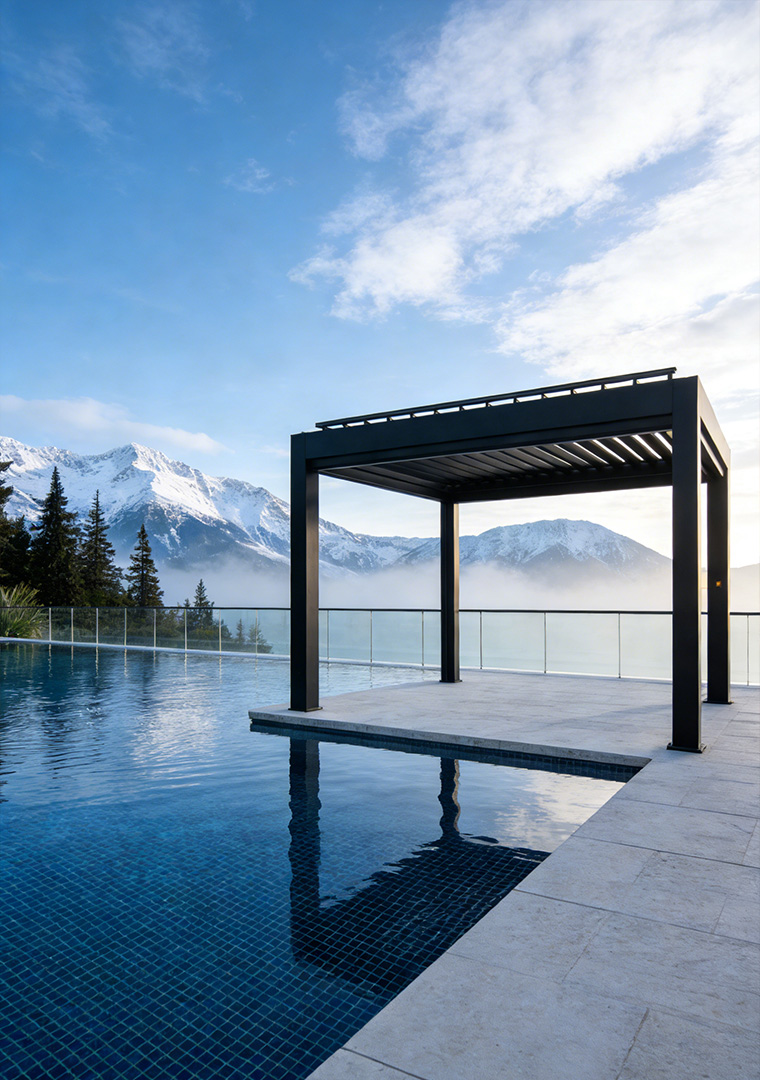
Common mistakes clients make and how to avoid them
Clients under-specify wind loading and then face retrofits; insist on site wind data or a conservative standard. They assume any PV module will fit; verify module weight and frame dimensions against the structure. Overlooking drainage leads to pooling and corrosion; require details for water run-off and coatings rated for coastal exposure. Avoid vague warranty language—require explicit remedies and timeframes. Finally, do not separate procurement of structure and PV without clear integration responsibilities; that creates finger-pointing on commissioning day.
Experience, evidence and a recognised anchor
I have specified outdoor shading and PV systems for a decade and review technical submittals as a standard part of procurement. Where policies and incentives drive uptake, they inform realistic production targets; for example, California’s residential solar programmes have shaped how designers size rooftop and pergola arrays. For contemporary options, consider a modern solar pergola that combines tested PV modules with factory-engineered mounting, and require test certificates and performance data with the tender. Ask to see measured output from an installed system rather than relying only on modelled estimates.
Bringing the specification to a decision
Write the tender so it rewards demonstrated delivery: scored criteria should include technical compliance, proven installations, warranty clarity and an itemised long-term cost estimate. Use the performance targets from your user brief as pass/fail gates: if a proposal cannot meet the kWh or structural requirements, do not proceed. When you accept a supplier, ensure the contract folds in commissioning tests and clear handover documentation so the client can operate and maintain the installation reliably, which is the practical value offered by Light Hunter.
