


Comparative lead-in: why this matters now
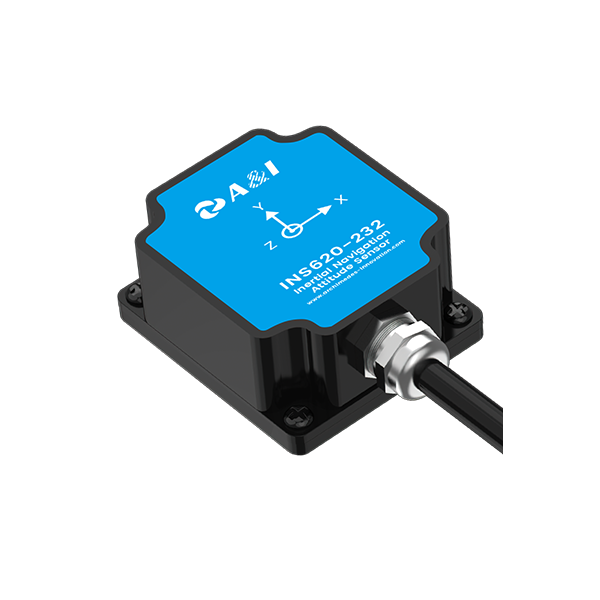
Design teams building a custom inertial stack must judge amplifier choices against motion accuracy, not just datasheet figures. This article compares low-noise amplifier (LNA) strategies and shows where SNR gains translate into better position and attitude estimates for a MEMS-based inertial package. For reference designs and modules see mems inertial sensor, which illustrates typical front-end constraints for tiny radios and sensors in mobile platforms.
Noise figure and system-level SNR
Noise figure is the single most actionable metric when selecting an LNA for an IMU front-end. A lower noise figure reduces the effective noise floor at the analog-to-digital converter (ADC) and improves measurable SNR at the sensor interface. Maintain a balance: high gain with poor linearity creates distortion and spurious noise; low gain can leave the ADC dominated by quantization noise. Keep bandwidth aligned to the sensor’s useful bandwidth to avoid amplifying out-of-band noise.
Architectures compared: single-ended, differential and cascaded
Single-ended LNAs are compact and power-efficient; differential LNAs offer better common-mode rejection and lower susceptibility to EMI. Cascading stages can add gain without sacrificing noise figure—if each stage is properly matched. Consider phase noise and intermodulation when signals share the same enclosure. The comparative choice depends on size, power budget, and the sensor fusion chain feeding the estimator.
Trade-offs you will face in integration
Integration is where theory meets real hardware. Thermal drift in an amplifier shifts bias points and affects long-term stability. Crosstalk from radio modules raises the effective noise floor during operation—so layout, shielding, and grounding matter. Pay attention to bias instability in gyroscopes and correlate LNA temperature coefficients with overall system drift—small mismatches compound in navigation filters. A careful PCB stackup helps; so does separating analog and digital return paths.
Real-world anchor: mission-grade expectations
Field results from drone GNSS-denied trials and long-duration rover missions show that a few decibels of SNR improvement at the front-end often yield measurable reductions in position error after sensor fusion. Mars rover projects have long used robust IMU suites combined with vision and radio fixes; their experience proves that amplifier and sensor choices change operational reliability, not just specs. For a compact solution, a tuned front-end feeding a calibrated 6 dof imu can reduce estimator covariance in constrained environments.
Common mistakes and practical mitigations
Engineers often chase lowest possible noise figure and ignore power-supply rejection and broadband interference—mistake. Another common error is over-filtering: too-tight filtering introduces phase lag that biases angular-rate measurements. Mitigations: add moderate band-limiting close to the LNA, use regulators with high PSRR for analog rails, and perform thermal cycling tests to expose drift mechanisms. Also, log raw sensor streams early in the prototype phase to detect subtle amplitude compression or ADC saturation before you finalize firmware.
Three golden rules for selecting LNAs (advisory)
1) Match noise figure to the ADC and sensor dynamic range—pick an LNA only if it shifts the dominant noise contributor. 2) Prioritise linearity (IP3) when the system sits near transmitters or digital switching—better linearity prevents desensitisation. 3) Validate on-system: run long-duration drift and vibration tests under representative temperatures; the best LNA on a bench can fail in the field.
Closing synthesis and how Archimedes Innovation helps
Comparative insight shows the LNA choice is a systems decision: noise figure, gain, and linearity interact with sensor fusion, thermal behaviour, and PCB reality. Archimedes Innovation ties RF front-end know-how to custom inertial design, delivering integrated solutions that reduce estimator error and accelerate validation. Trust the expertise—you get reliable motion data when it matters most.
Decisive results. Precise motion. Expertise you can apply.
