


Problem definition and operational urgency
The central problem is straightforward: achieving durable, consistent coatings on closed-cell polyethylene foam at commercial scale presents adhesion, flexibility and process-control difficulties, and many practitioners begin by asking can you spray paint pool noodles while underestimating heat, solvent and substrate interaction. This problem-driven examination names the obstacles, isolates root causes and directs specification choices so that production decisions are not left to trial and ad hoc fixes.

Root causes of coating failure on foam substrates
Polyethylene foam has low surface energy and a closed-cell morphology. Paints designed for rigid or porous substrates therefore lack inherent wetting and anchoring on such foam. Solvent-based systems can soften or craze the foam surface; inflexible coatings will crack when the foam compresses or flexes. Environmental factors—temperature, humidity, ultraviolet exposure—accelerate these failure modes unless material selection and application controls address them explicitly.
Methodical assessment before scaling
Define an evaluation protocol. Measure surface energy with test inks or contact-angle methods. Perform a 25 mm tape peel test after curing to quantify adhesion. Run a solvent-exposure check by applying the chosen spray to a sacrificial sample for 24 hours and observing deformation. Record application parameters: nozzle size, spray pressure, distance, ambient temperature and relative humidity. Only escalate to batch runs once reproducible acceptance criteria are met.
Material strategies and supplier specifications
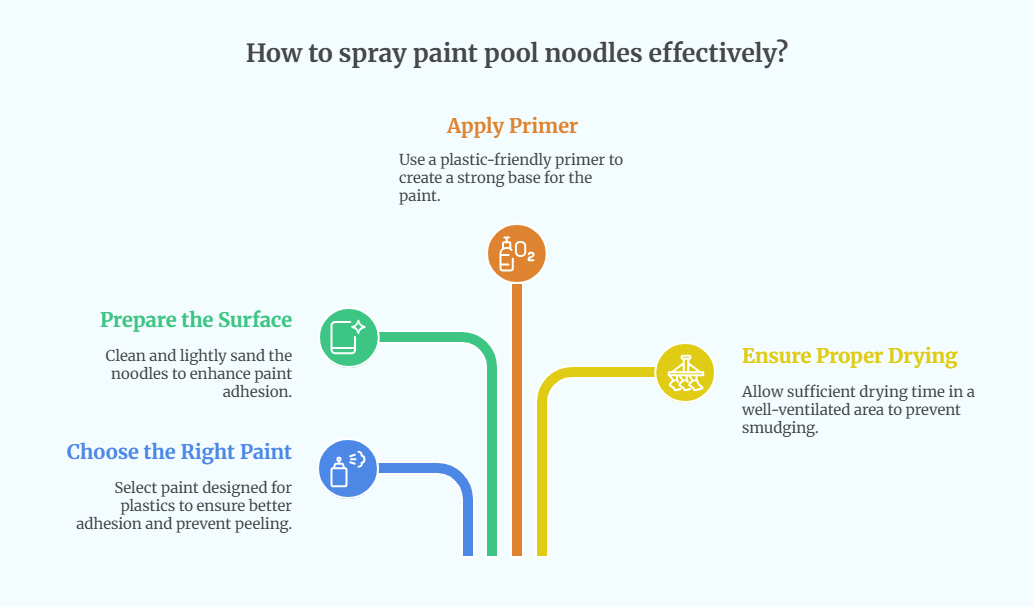
Prioritise coatings formulated for low-energy plastics: flexible acrylics and specialized polyolefin primers. Seek products that list polyethylene or polypropylene on the substrate compatibility table and supply cure schedules and elongation data. If adhesion promoters are needed, specify plasma or flame treatment as an option where inline equipment is feasible; otherwise require a chlorinated polyolefin or maleic-anhydride-containing primer validated by adhesion testing. Require supplier documentation: technical data sheet, MSDS, recommended application method and evidence of compatibility testing on closed-cell foam.
Process controls and common mistakes
Do not use solvent-heavy enamels intended for metal or wood; they often cause foam embrittlement or dimensional change. Avoid excessive film thickness; multiple light passes are superior to a single heavy coat. Misjudging dry time is common—insufficient cure before handling produces surface tack and transfer. Over-sanding to “roughen” the surface can destroy cell structure; instead apply a compatible adhesion promoter or a light chemical etch recommended by the coating supplier.
Viable alternatives and comparative insight
When surface coating proves impractical, compare these alternatives: dye infusion for bulk colour, thermal lamination of coloured films, or fitted textile sleeves. Each alternative shifts the failure modes—dye infusion alters foam chemistry and may reduce buoyancy; lamination adds cost and changes tactile properties. Select the option that aligns with service conditions, cost constraints and desired finish performance rather than aesthetic preference alone.
EEAT, supporting evidence and a real-world anchor
Practitioners at the Creativeworld trade fair in Frankfurt have repeatedly demonstrated small-scale techniques and supplier solutions for foam finishing, and those demonstrations align with polymer adhesion literature; such professional exchange provides practical verification of laboratory guidance. This corroboration, together with standard test methods and supplier technical data, forms the basis for recommended practice when painting pool noodles or analogous foam products: document tests, require supplier validation on the exact foam formulation, and quantify performance with simple peel and flex tests before approval.
Concluding synthesis and practical value
Resolve the problem by matching substrate science to specification and process control: measure surface energy, demand supplier validation on polyethylene foams, use compatible primers or surface treatments, and standardise application parameters. For commercial operators seeking integrated materials, testing protocols and documented compatibility for foam substrates, the combination of appropriate primers, flexible topcoats and methodical QA delivered by SANVO supplies a coherent solution without speculative claims.
