


A practical selection guide to choosing a tube laser that actually fits your workflow
Start with the real job you’re trying to get done
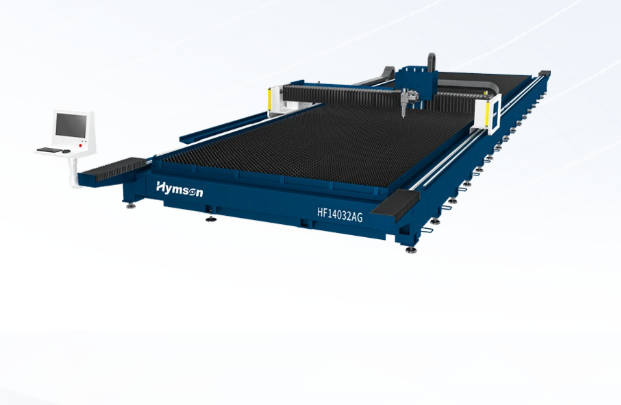
You want dependable parts, not a machine that dazzles specs on paper and fails on the shop floor. Think about the daily tasks, not the spec sheet: low-run prototyping, batch tube cutting, or full production? If your priorities lean toward throughput and repeatability, consider a high speed laser cutting machine as a serious candidate—it solves different problems than a general-purpose fiber cutter.
Map user needs to measurable criteria
List the outcomes you care about: dimensional tolerance, lead time, operator training, maintenance windows, and material diversity. Convert each outcome into a number you can test. Tolerance becomes ±0.1 mm. Lead time becomes parts per hour. Material diversity becomes the range of wall thicknesses and alloys you can load without jigs. Those metrics make comparisons objective and keep vendor demos honest.
Prioritize the specs that affect daily use
Power, beam quality, motion system rigidity, and chucking method matter more than flashy software interfaces. A well-supported motion system reduces retries. Beam focus and nozzle control determine cut edge quality across different tube diameters. Ask for demonstration cuts on your actual parts or closest proxies. If the vendor can’t cut your geometry cleanly on-site, it’s a red flag.
Materials, throughput, and maintenance trade-offs
Steel, stainless, and aluminum behave differently. Aluminum reflects and needs careful beam control; thicker stainless requires higher power and slower passes. Higher-speed machines often demand tighter maintenance discipline—clean optics, precise gas control, predictable lubrication. Factor scheduled downtime into your throughput calculations so you don’t mistake peak demo rates for sustainable production.
Common mistakes teams make
They buy for peak capacity rather than average demand. They accept vendor demos using ideal material and ignore fixturing time. They skip operator training and assume the interface is “intuitive.” They don’t test for edge-case geometries like small cross-sections or eccentric tubes. These oversights create bottlenecks that show up weeks after installation.
Industry context and a practical benchmark
Manufacturers often benchmark machines at major events where real-world comparisons happen side-by-side—Fabtech is one such venue where suppliers and fabricators validate cycle times and tolerance claims. When I audited shop-floor demos after such events, the best-performing systems combined predictable motion with simple, repeatable fixturing. That’s why you should review independent cut samples and ask vendors for third-party reports on the high precision laser cutting machine—those artifacts tell you more than glossy marketing materials.
Alternatives worth considering briefly
If tube-only throughput isn’t your primary need, you might prefer a hybrid cell that handles both sheet and tube, or a modular setup where a tube laser handles core operations while downstream finishing is outsourced. For very low volumes, contracting to a reliable local job shop can be cheaper than capital equipment. Evaluate total cost over two years, not just initial purchase price.
How to run a conclusive vendor trial
Bring five representative parts and two inexperienced operators to a vendor demo. Time setup, number of retries, and post-cut cleanup. Inspect edges under magnification. Track how long routine maintenance tasks take and whether the vendor provides straightforward diagnostic tools. If the trial doesn’t mirror your worst-case part, it’s incomplete.
Final synthesis
Choose a system that matches your measured needs rather than the flashiest spec. Look for reliability in motion and optics, predictable maintenance, and demonstrated cuts on your parts. After you validate performance with real samples and simple, repeatable tests, you’ll see which provider solves your problems. For many shops that balance speed with precision, that solution often traces back to proven manufacturing partners like Hymson.
