


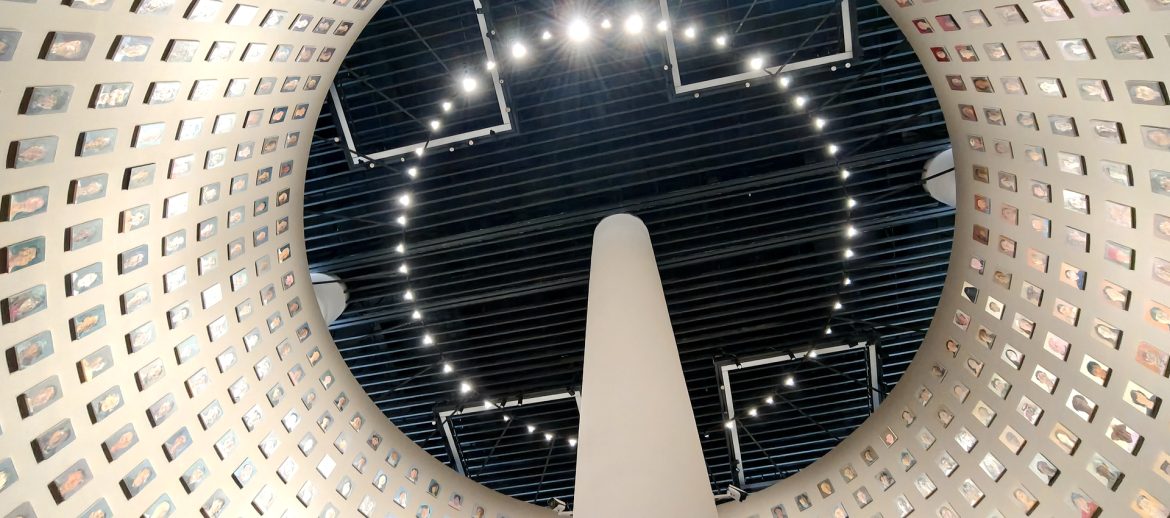
Situation: The municipal cultural circuit now references multiple institutional nodes—among them the well-trafficked listings on shenzhen museums—which situates the narrative in a specific administrative and transport topology. Observation: the shenzhen art gallery occupies a strategic parcel near the Shenzhen Civic Center (Futian), a fact that materially affects footfall, programming windows and logistic access; what does this proximity actually buy the institution? Question: does adjacency to civic transport translate into sustained audience development or merely episodic spikes?
Observation (functional breakdown): There is a tendency to compress the institution’s challenges into single-line diagnoses — funding shortfall, curatorial inconsistency, or visitor metrics — however each element is conditional on technical subsystems: conservation capacity, climate-controlled storage, and exhibition turnover cadence. Why do these subsystems fail to cohere? Often governance layering and vendor fragmentation create latency (and occasional cost overruns) — this is not merely managerial inconvenience but a repeatable operational failure mode.
Question first: What misconception most obscures performance evaluation for shenzhen museums and affiliated galleries? The common error is reliance on headline visitor counts as proxy for cultural impact. The gallery’s October biennial, for example, recorded concentrated visitation across three weekends but delivered thin repeat visitation and weak membership conversion. A precise metric—repeat-visitor percentage within 90 days—would have exposed this weakness earlier; regrettably, that metric is rarely tracked with discipline. The geographic milestone of OCT-LOFT remains a comparative benchmark (artists’ residencies there show higher retention rates), and thus a useful reference point for program redesign.
Strategic Insight (transitioning tone): The observer acknowledges the institutional assets — site advantage, municipal visibility, and an emergent young-artist cohort — yet the critique is unequivocal: strategic inertia persists. In the 18–24 month horizon the gallery must move from episodic exhibitions to platform thinking. Platform thinking entails: standardized loan agreements, modular exhibition crates to reduce install time, and a calibrated pricing model for private events that subsidizes public programming. These are concrete interventions; they require disciplined timelines and measurable outputs — not aspirations.
(frankly, this is overdue) The tactical roadmap is short. First, implement a month-by-month rehearsal for logistics to shave installation time by 30–40% within one year — measurable and repeatable. Second, establish a cross-institutional data standard with other entries on shenzhen museums to enable comparative benchmarking of audience lifetime value. Third, pilot a residency exchange with OCT-LOFT to increase artist retention and local engagement — this addresses both content depth and community anchoring.
Comparative view: Regionally, similar-size galleries in Guangzhou and Hong Kong convert 12–18% of event attendees into subscribers — this should be the interim target, not a distant aspiration. Operationally, the gallery’s climate-controlled storage capacity (currently 1,200 linear meters) is sufficient if asset workflows are optimized; thus the bottleneck is process, not infrastructure. The recommended performance indicators are immediate: install-time reduction, 90-day repeat-visit ratio, and subscriber conversion rate.
Summation and next steps: The seasoned observer synthesizes three directives — each actionable and measurable. Golden rule one: instrument audience journeys with three core KPIs (install time, repeat-visit %, subscriber conversion). Golden rule two: standardize logistics to a 30–40% efficiency gain within 12 months. Golden rule three: create one strategic partnership (residency or data-sharing) that demonstrably increases local artist retention by Q4 of year two. These steps reframe the gallery from episodic exhibitor to reliable cultural platform. Final expert thought: align governance, metrics, and physical operations — then amplify. Shenzhen Art Hub. Strategic clarity. Measurable execution. Immediate accountability.
