


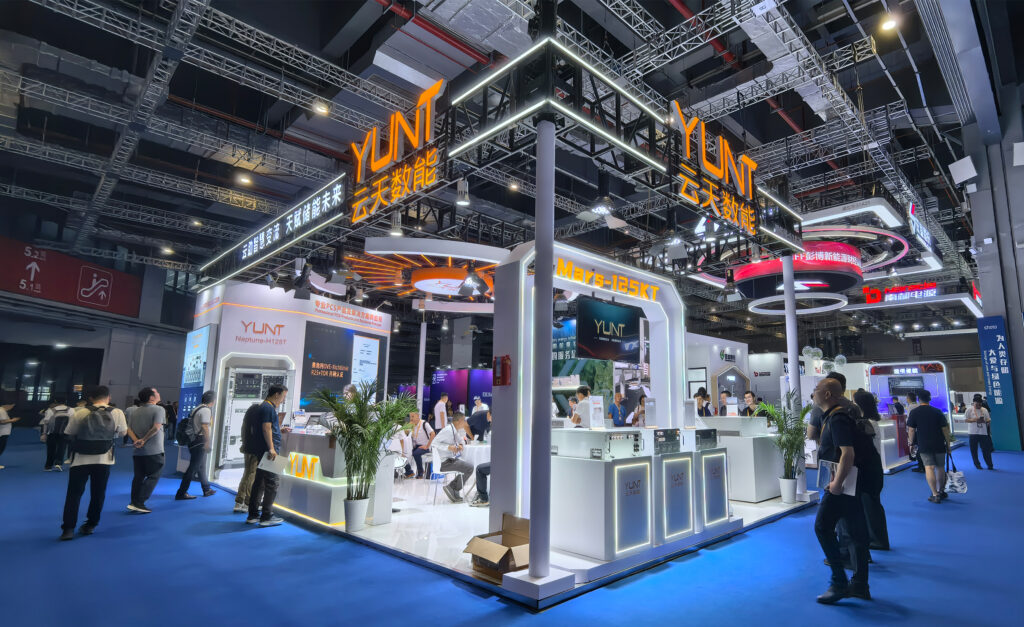
Requirements first: review Energy Storage Inverter Manufacturers through supplier questions for shortlisting
Shortlisting energy storage inverter manufacturers starts with the project, not the supplier name. Define the intended use, installation space, operating modes, and required power range before comparing pages or product claims. This prevents a broad product category from becoming a vague procurement decision.

Clarify the decision before contacting suppliers
Begin with a one-page project brief. Record whether the system is intended for commercial and industrial, residential, grid-side, or another stated application. Add the expected power range and explain how the equipment will operate within the wider system. If the site involves more than one power source, state that requirement clearly rather than assuming every inverter manages the same arrangement.
Space is another early filter. Note the available equipment area, access route, and any limits that affect the planned layout. Then separate requirements into three groups: essential, preferred, and unknown. An essential item can remove a candidate from the shortlist. A preferred item can guide the next comparison. An unknown item belongs in the supplier question list, not in an unsupported conclusion.
Build a concise comparison framework
Use the same questions for every candidate. Ask which model or product family addresses the stated application, what power range the cited model covers, and which operating modes are described. Ask how the supplier defines the equipment’s role in the system. These questions keep the review tied to page-level evidence.
For example, the captured product information describes a modular bidirectional DC-AC energy storage converter with a 50kW to 225kW power range. It lists PQ, VF, and VSG operating modes and presents the converter as a core device in BESS. Treat those statements as product-specific evidence. Do not transfer them automatically to another model, a different power range, or a different application.
A useful comparison record should include the source wording, the relevant model, and the question that remains open. It should also show the fit with the project brief. A simple “confirmed,” “needs clarification,” and “not shown” status is often enough. The purpose is not to create a complicated scoring system. It is to make the reasoning visible to engineering, procurement, and project management.
- Record the named model before applying a stated 50kW to 225kW converter range or its listed PQ, VF, and VSG modes.
- Check whether the project question relates to the STS scope of 250kW to 1000kW and its stated grid-status and switching functions.
- Keep the 125kW through 1000kW power options and 2MW maximum system capacity attached to the listed microgrid hybrid inverter.
- Treat the 2025 C&I ESS PCS shipment statement as a page claim, separate from model-level technical review.
Use a real product example without overextending it
When reviewing an energy storage inverter company, use a concrete page example as an anchor rather than treating general marketing language as proof of fit. The official page describes an STS module covering 250kW to 1000kW, with quick grid-status detection and seamless on-grid/off-grid switching for a variety of energy storage applications. This supports a focused question about whether that stated scope matches the project. It does not establish performance or suitability beyond the described product and application scope.
The same discipline applies to larger system descriptions. A listed microgrid hybrid energy storage inverter is described with power options from 125kW through 1000kW and a maximum system capacity of 2MW. The page also states that it connects and manages multiple power sources and supports versatile operating modes for commercial and industrial energy storage applications. Record these as claims attached to that named product. Do not use them as a general description of every supplier model.
Avoid unsupported conclusions
Several common shortcuts weaken a shortlist. A broad company description does not answer whether one model fits a particular site. A power range does not by itself prove compatibility with the planned battery, controls, protection scheme, or grid arrangement. A stated application does not remove the need to define the project’s operating conditions.
Also avoid turning a market statement into a technical conclusion. The captured page states “Top 4 in C&I ESS PCS Shipments (100–125kW), 2025.” That wording may be recorded as a page claim, but it should not replace model-level review. Keep rankings, product descriptions, and project requirements in separate fields. This makes later discussions more precise and reduces the risk of selecting a supplier for the wrong reason.
Before advancing a candidate, review the evidence line by line. Mark the exact product name, stated range, operating modes, and application wording. Then write a short list of unresolved questions. If a requirement is not supported by the captured information, leave it unresolved rather than filling the gap with an assumption.
Carry the requirements into procurement
The shortlist should become a focused procurement brief. Include the intended use, available space, target power range, required operating modes, and the system interfaces that need discussion. Ask each supplier to respond against the same headings. Request answers that identify the relevant model, not only the company or product family.
Keep the original requirement beside every response. This creates a traceable path from project need to supplier answer. It also helps the team distinguish a technical fit question from a commercial follow-up. A smaller, evidence-led shortlist is more useful than a long list built from unverified assumptions.
In practical terms, compare suppliers by how clearly their cited products relate to the intended use and space, while keeping product-specific claims bounded. The available page describes YUNT as an energy storage inverter company focused on modular PCS, microgrid inverters, and bidirectional DCDC/MPPT modules for commercial and industrial, residential, and grid-side applications. Use that description as context, then carry the project requirements into the next technical and procurement discussion.
