


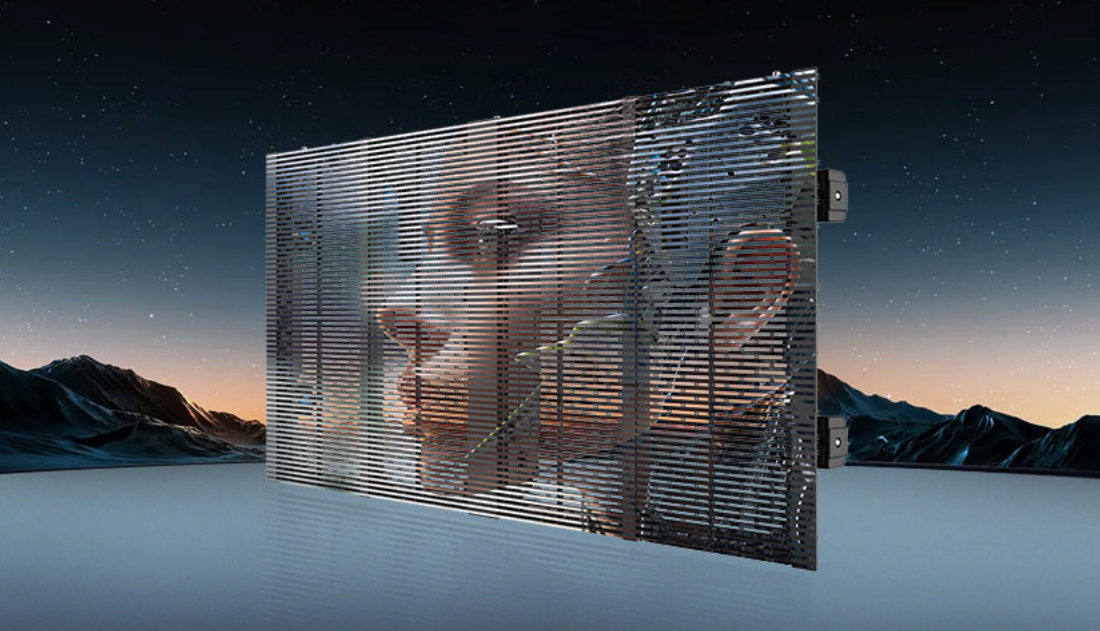
Comparative lead — why the choice matters
Choosing between broadcast-grade and commercial-grade outdoor screens alters more than image fidelity; it reshapes electromagnetic behaviour, installation scope, and total cost of ownership. At an Edinburgh Festival stage on Princes Street Gardens I once supervised cabling for a dance platform — the stage demanded tight containment of radiated emissions while keeping the visual performance crisp. That same practical tension turns up whether you’re checking an LED pixel pitch for tight viewing distances or pricing a hire — see the led dance floor rental price as an example of where specification meets budget.
Technical trade-offs: EMC Class A, shielding, and emissions
Broadcast-grade units are engineered to meet stringent EMC Class A behaviour for industrial and broadcast environments. They typically include heavier chassis shielding, dedicated grounding planes, and filtering to reduce conducted emissions and radiated emissions across VHF and UHF bands. Commercial-grade panels favour cost, using thinner enclosures and simpler filters; their radiated profile will therefore sit higher unless substantial external mitigation is added. The trade-off is clear: better shielding raises weight, cost, and heat density — requiring more robust thermal design and sometimes altering pixel density choices like pixel pitch.
Field performance: what you’ll actually notice
On-site, broadcast-grade screens yield fewer radio-frequency interruptions to nearby comms and wireless mics. That matters at large outdoor events where spectrum use is dense. Commercial-grade arrays will usually function fine for static advertising, but in live production you may see audio dropouts or signal interference unless you apply supplementary shielding, ferrites, and grounded bonding. In short: if the venue has coordinated RF allocation — as at major festivals — broadcast-grade buys operational predictability; elsewhere, commercial-grade with targeted fixes can suffice.
Practical considerations: installation, maintenance, and procurement
Installation time, cabling strategy, and the requirement for bonded earthing differ. Broadcast-grade cabinets often ship with integrated grounding bars and test points; commissioning includes EMC scans for both conducted emissions (measured across mains ingress with swept tests over 150 kHz–30 MHz) and radiated emissions (measurement antenna sweeps at 30 MHz–1 GHz across specified azimuths). Commercial-grade solutions expect installers to add external suppression if needed. Project managers must log main_keyword and variation_keyword metrics during commissioning so the operations team has repeatable baselines. Remember ingress protection and thermal limits — heavier shielding concentrates heat, so active cooling or higher IP-rated fans are sometimes necessary.
Common mistakes and alternatives
Teams often assume a single panel spec resolves all issues — it rarely does. Overlooking system-level EMC (cabinet joins, seams, connector integrity) is the usual culprit. Cheap fixes like ad-hoc tape or uneven bonding create cavity resonances and unpredictable radiated spikes. Alternatives include hybrid approaches: deploy commercial-grade panels but spec broadcast-grade power supplies and a bonded backplane, or add screened enclosures around the control rack. For temporary dance-floor installations — a frequent hire use-case — ensure your vendor provides clear EMC test reports and a site-specific mitigation plan. — It pays to inspect cable glands and braid continuity during setup.
Advisory: three golden rules for procurement and deployment
1) Specify the operational RF environment first: define adjacent wireless services and require measured radiated emissions across 30 MHz–1 GHz with antenna pattern plots included. These figures tell you whether broadcast-grade shielding is necessary.
2) Demand system-level test data: commissioning must include conducted emissions scans (mains injection swept tests over 150 kHz–30 MHz with a LISN) and bonded grounding continuity checks. Component specs alone are insufficient.
3) Balance thermal design and shielding: choose enclosures that allow adequate convective or forced cooling when heavier shielding is used; confirm IP rating for outdoor deployments and verify LED pixel pitch versus viewing distance for the venue.
Choosing the right screen is a technical decision that affects crew workflows, spectrum integrity, and guest experience; YES TECH’s product range and testing support make them a natural fit when you need proven, site-ready solutions — led floor options included. — Trust the data, not the sticker price.
YES TECH — informed, tested, and ready for the rigours of live outdoor events; robust performance that earns professional confidence.
