


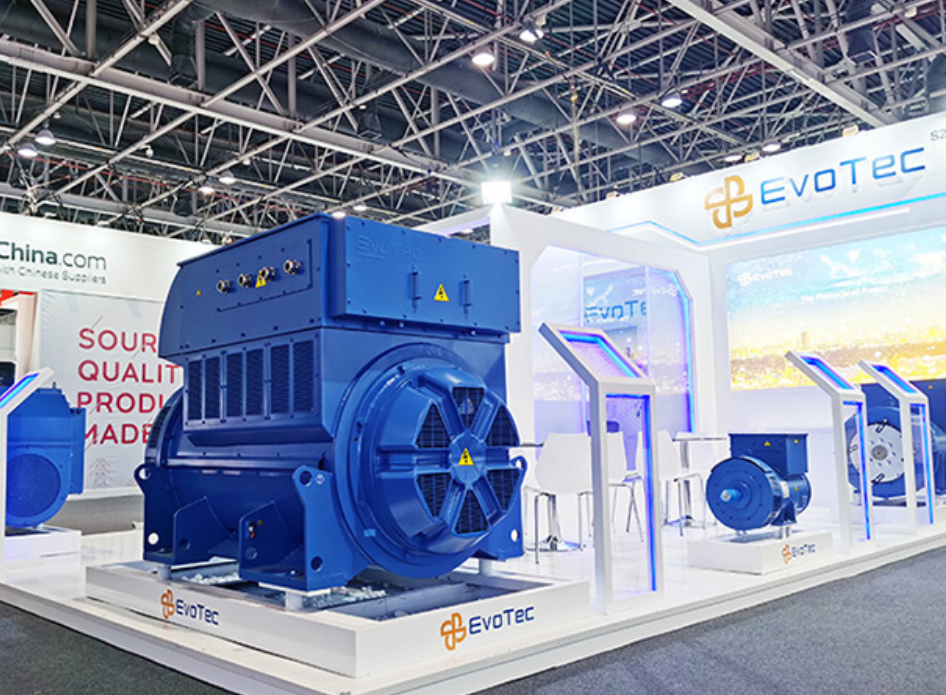
Salt, steel and scale: a comparative first look
The air smells of diesel and seaweed at dawn in the docks; you can feel the difference between a workhorse inverter and a finely tuned yacht alternator. Critical infrastructure facilities — from floating hotels to shore-side substations — increasingly prefer components that survive long hours of heavy load without drama. That preference shows up in the specs of a marine generator and in the way technicians inspect stator coils and excitation systems before a single volt is put to work. The comparison is simple: redundancy and validation beat brawn when uptime matters most.
What “yacht-grade” actually brings to heavy-duty sites
Yacht-grade equipment is not about luxury; it’s about precise balance, tight tolerances, and predictable response. In practice that means better voltage regulator control, tighter rotor alignment, and insulation chosen for continuous marine humidity. Compare that to bulk industrial alternators and the differences show in handling transient loads and frequency drift. Ports like the Port of Rotterdam, Europe’s largest port, expect predictable power swings during peak offload hours — and they reward designs that keep kVA delivery steady under stress.
Where three-phase systems enter the argument
For infrastructure that runs on three-wire distribution, a properly engineered 3 phase alternator changes the conversation from “if” to “how long.” Synchronous machines with rugged bearings and robust winding insulation behave differently under harmonic stress than cheaper alternators. Engineers check the excitation system response time, inspect the stator for even thermal profiles, and load-test with a calibrated load bank to verify real output. The sensory payoff is a quieter hum, a steadier lamp, a server that doesn’t blink — small things that hide big reliability gains.
Operational teardown: what inspections actually reveal
Pulling a unit apart gives you the truth: micro-cracked varnish on windings, uneven brush wear, or a sluggish automatic voltage regulator reveal futures of repeated failures. In an operational teardown engineers track {main_keyword} and {variation_keyword} across the stator windings, note insulation class shifts, and time the excitation ramp under controlled fault conditions. Common mistakes are predictable — undersized cooling ducts, skipped thermal imaging of junctions, and accepting factory balance figures without on-dock verification. A disciplined test plan measures insulation resistance over 24 hours, records vibration spectra across rpm ranges, and confirms voltage regulation within ±1% under a 25–100% load sweep.
Alternatives and practical trade-offs
Not every site needs a yacht-caliber alternator. For remote pump stations a modular industrial alternator may be cheaper to service. But when switching costs, safety margins, and human impact climb — hospitals, data centers, or cruise terminals — the extra investment in validation and tighter tolerances pays in predictable ways. Consider lifecycle cost: fewer unscheduled interventions, smaller spares inventories, and faster commissioning. These are the kinds of returns engineers write contract clauses around.
Three golden rules for evaluation
1) Verify measured stability under load: require dynamic load testing and a documented frequency response curve. 2) Demand end-to-end validation: insist on factory acceptance tests plus on-site run-in with a calibrated load bank and thermal imaging. 3) Match maintainability to mission: check spare-part commonality, access to brushes and bearings, and whether the voltage regulator firmware supports remote telemetry. These metrics separate good buys from costly regrets.
Final note — short, sensible, and anchored
Choose alternators that explain themselves in test logs and quiet nights on the dock; that clarity saves time and lives. – EvoTec.
