


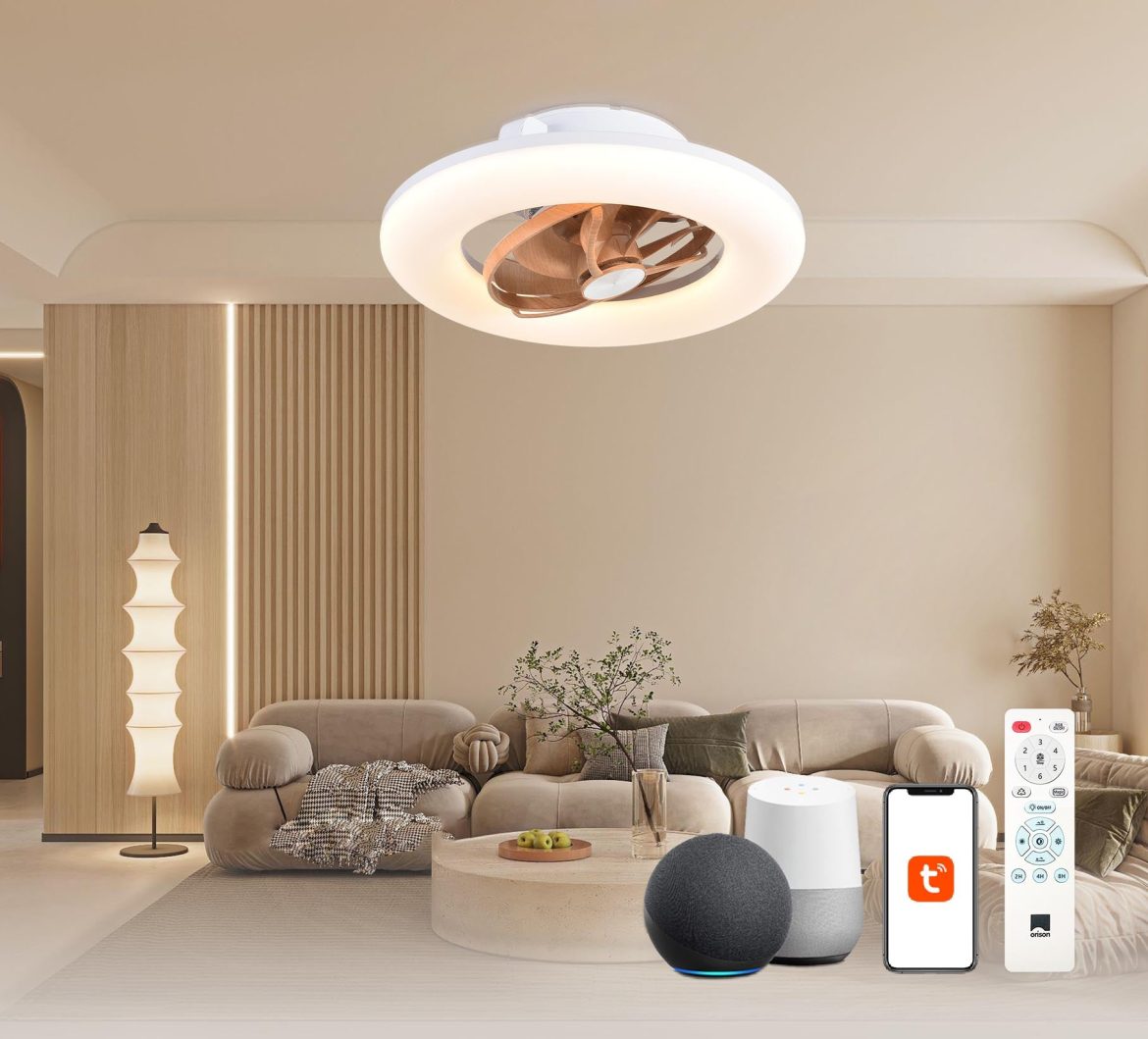
Introduction: framing the user problem and solution pathway
Residential occupants frequently report pockets of stagnant air and uneven thermal comfort in irregularly shaped rooms; resolving these issues requires selection and placement decisions that prioritize occupant experience over mere aesthetics. This user-centric review addresses practical adjustments for rustic ceiling fans with integrated lighting, and considers smart control options such as an alexa ceiling fan to modulate speed and scheduling remotely. Central concepts include airflow distribution, appropriate CFM relative to room area, and blade pitch optimization to reduce stratification while preserving the rustic design language.

Diagnosing dead zones: simple tests and objective measures
Begin by mapping thermal and air-movement variations with low-cost tools: a handheld thermometer, an anemometer, and occupant feedback. Measure temperature differentials at floor, midlevel, and near-ceiling heights; record airflow in key seating and appliance zones. Quantitative targets are useful: aim for perceptible airflow (0.15–0.25 m/s) in occupied zones during active use, and verify CFM output declared by the manufacturer is reasonable for the room volume. This diagnostic step establishes whether the issue is placement, insufficient CFM, or obstructions that create recirculation pockets.
Design variables that influence distribution
Several technical factors govern how a rustic fan moves air and integrates light without creating glare or imbalance. Blade diameter and blade pitch together determine swept area and effective thrust; a larger diameter with a moderate blade pitch often improves low-speed distribution in larger rooms. Motor characteristics such as motor horsepower and rated RPM affect torque under load, which is important when light kits add weight. For rooms with higher moisture exposure — e.g., covered porches adjacent to living areas — choose damp-rated fixtures. Consider also whether a reversible motor and variable-speed control are included; reverse mode aids in seasonal stratification management.
Placement, mounting height, and obstruction management
Optimal placement is frequently non-intuitive in L-shaped or multi-ceiling-height rooms. Place the fan closer to the primary activity area rather than strictly at geometric center when furniture or alcoves define use zones. For high ceilings, use a downrod to maintain the recommended 8–9 foot distance from floor to blade tip; for low ceilings select a flush or low-profile mount while accepting some trade-offs in airflow. Avoid locating fixtures directly above airflow obstructions like beams or enclosed light fixtures. Proper spatial planning frequently resolves dead zones without higher CFM—less is more when directional circulation is intentional.
Smart integration and control strategies
Integrating smart controls enables adaptive responses to occupant patterns. Devices compatible with voice assistants and hubs allow schedules, occupancy triggers, and multi-speed scenes that reduce stagnation during peak occupancy. For example, linking a ceiling fan to a smart hub enables automated ramp-up when a thermostat records a 2°F rise—an approach consistent with ASHRAE guidance favoring active air movement to enhance perceived comfort. Use of an alexa compatible ceiling fan can therefore be instrumental in balancing comfort with energy considerations.
Installation and tuning: balancing and commissioning
After mechanical installation, commissioning is essential. Balance blades to reduce wobble and noise; even small imbalances alter effective airflow patterns. Verify speed settings produce proportional increases in CFM without excessive sound. If multiple fans are present, tune relative speeds to create gentle cross-flow rather than opposing jets that increase turbulence. A short commissioning checklist should include blade alignment, motor vibration assessment, light kit thermal check, and remote integration validation. Small adjustments here yield outsized improvements in perceived ventilation—so allocate time for this phase.
Common mistakes and mitigation
Typical errors include over-reliance on aesthetic symmetry, underspecifying motor torque for heavy light kits, and neglecting smart control coordination across multiple fans. Another frequent oversight is assuming ceiling fans replace ventilation—rather than complementing it—so plan for both displacement and dilution strategies when indoor air quality is a priority. Finally, do not overlook clearance and code requirements; lighting integration can alter mounting decisions and electrical load calculations.
Real-world anchor: lessons from extreme heat events
During the 2021 Pacific Northwest heatwave, many retrofits demonstrated that increased air movement significantly improved occupant comfort in otherwise under-served rooms. Practitioners who combined modestly higher CFM targets with targeted placement and smart scheduling reduced calls for emergency cooling interventions. This anecdotal evidence aligns with widely recognized ventilation principles and underscores the practical value of well-specified ceiling fans in resilient home design.
Advisory: three golden rules for selecting and tuning rustic ceiling fans with lights
1) Match effective CFM to room area and use-case: aim for conservative CFM-per-square-foot targets and validate with on-site measurements. 2) Prioritize placement and mounting height over sheer CFM: a correctly located fan often eliminates dead zones more efficiently than a more powerful but poorly placed unit. 3) Insist on smart integration and commissioning: confirm compatibility with your smart hub, test voice and schedule functions, and perform a post-installation air-movement assessment. These metrics will guide procurement and installation decisions and yield measurable comfort improvements for occupants.
For practitioners seeking a balanced solution that couples dependable airflow with modern control and rustic aesthetics, consider how integrated options from trusted suppliers align with your specification and control strategy—this is where the practical value of Orison becomes evident. —
