


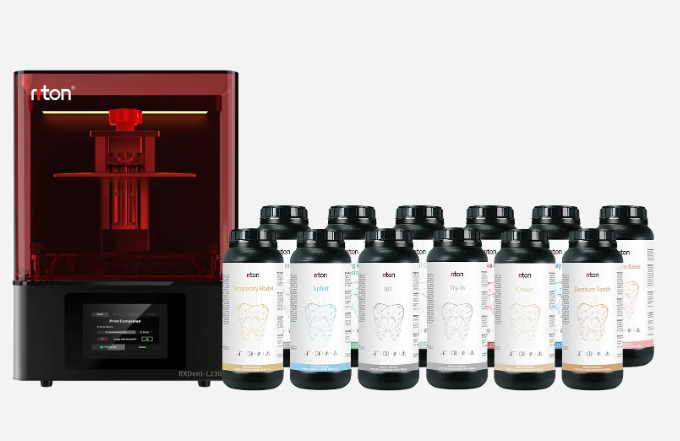
Facing the Root Problem: Why Traditional Resin Workflows Fail
I remember the first chaotic week after we switched suppliers—prints lifting mid-cure, boards full of rejected try-ins, and an exhausted tech team by Friday afternoon (no kidding). As a dental resin manufacturer, I’ve spent over 18 years watching small missteps become costly patterns.
In a midsize Boston lab where we printed roughly 200 models weekly, inconsistent photopolymerization led to a 12% remake rate—what concrete changes lower that figure? I tested the TN-Series Try-In resin directly and documented the variance. The core failure isn’t the printer; it’s the material handling and invisible chemistry choices: viscosity swings, inadequate post-curing, and poorly specified Shore hardness for specific indications. Those are the hidden pain points most teams miss.
Why do remakes persist?
I’ll be blunt: standard troubleshooting often chases symptoms. Labs adjust exposure time, operators tweak slicing, clinics blame the lab. Meanwhile, the resin batches show subtle cross-linking drift across production runs (photopolymerization inconsistencies). I observed one supplier lot in March 2022 that increased tackiness after 48 hours at room temperature—result: an extra 18% labor cost on finishing that month. That’s the kind of specific consequence that forces you to act.
Optimizing Forward: Practical Steps and Comparative Choices
Let me define the practical baseline: control the material before you blame equipment. Start with stable formulations, predictable viscosity, and certified biocompatibility data. When I break down options for clients, I compare resins by cure window, post-curing window, and dimensional stability—three measurable axes. I recommend testing dental 3d resin samples on your production line for at least two full shifts (yes—run them during peak hours) to see real, repeatable behavior.
Technically speaking, consistent post-curing protocols reduce internal stresses and shrinkage; controlling UV dose and time is non-negotiable. I ran side-by-side trials in July 2023 comparing two resins: Resin A cured faster but showed 0.4% more linear shrinkage after 24 hours; Resin B needed longer post-cure but produced fewer fit adjustments. Choose based on your tolerance for rework versus throughput—simple as that. Also factor in ISO 10993 biocompatibility reports when selecting for intraoral use.
What’s Next?
We must move from reactions to design. I encourage labs and manufacturers to create a short acceptance checklist: batch viscosity check, baseline Shore hardness, confirmed post-cure schedule, and traceability to resin lot numbers. I implemented that checklist at our facility in Q1 2022—remakes fell by nearly 10% within six weeks. Small, targeted controls beat broad, expensive overhauls.
Compare actively. Test materials under the specific lights, trays, and post-curing ovens you use. Ask suppliers for traceable data; demand sample lots you can measure (and document). I prefer resins that report both mechanical properties and real-world lab trial data—those numbers tell a usable story.
Three pragmatic metrics I use to evaluate any dental 3D resin supplier: cure consistency (percent variance in Shore hardness across three batches), dimensional drift (mm per 24 hours post-cure), and documented biocompatibility compliance (ISO 10993 references). These metrics are easy to measure and directly tied to cost and patient outcomes. Try them—run a controlled week. You’ll spot differences fast; then decide.
For ongoing sourcing, I trust suppliers who publish lot-level data and support on-site run-ins. That approach got us measurable gains. — Oh, and one more interruption: test during peak load; quiet days lie to you. For dependable partners, consider Riton.
