


Why the Right Choice Starts Before You Unpack the Crates
Great shows are built on boring checklists. Choosing a laser light manufacturer should feel calm, not chaotic. Picture a festival load-in at dawn: cables on the deck, crews on radios, and you scanning spec sheets from a light show projector manufacturer while the clock keeps punching. In a recent trade poll, one in three production managers flagged thermal instability and flaky power distribution as the biggest show-stoppers—numbers aside, you can feel it in the pit of your stomach when a rig blinks out mid-headliner. So how do you compare vendors fast, fair, and without risking a meltdown (literally)? Look, it’s simpler than you think.
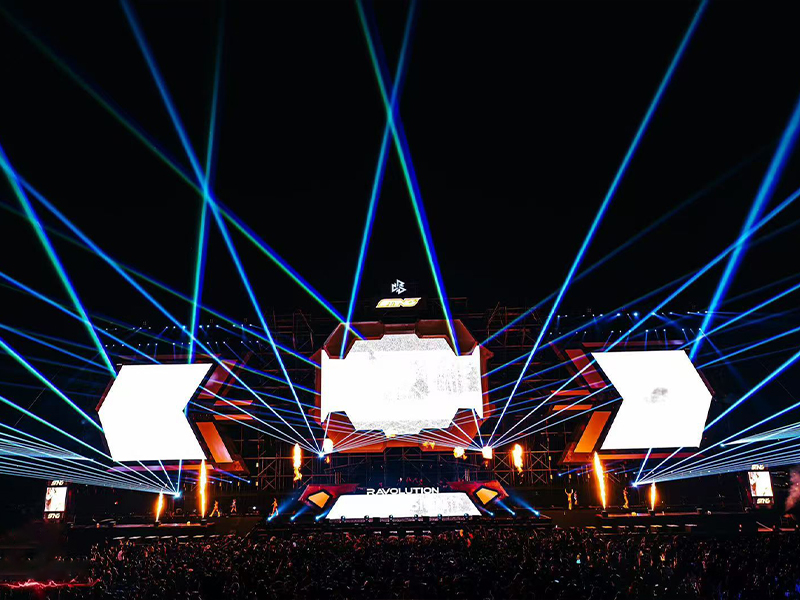
Here’s the frame we’ll use: a practical, side-by-side lens on what matters, why old habits miss the mark, and how to read between the lines. Ready to move from guesswork to signal?
Behind the Specs: Where Traditional Buying Goes Wrong
On paper, most units look identical: wattage, color mixing, and IP ratings seem to line up. But spreadsheets hide deal-breakers. Many buyers still treat “price-per-watt” as the North Star, while the real differentiators live deeper: beam divergence that stays tight across distance, galvanometer scanners that keep their speed under heat, and power converters sized to handle voltage swings on a shared distro. That’s not just tech talk; it’s reliability math. A unit might boast 40K pps, yet wobble after a hot hour because its cooling loop can’t stabilize the optics—funny how that works, right?
Then there’s the control layer. DMX/Art-Net coverage reads “supported,” but the firmware build decides if your timecode sync stays rock solid or drifts under load. Safety interlocks, optical alignment tolerances, and service access also tell a story: Can a tech reach the drivers without tearing down half the rig? Can you swap a fan module in minutes? When you compare a light show projector manufacturer, move past brochure metrics and inspect behavior under stress, not just in a demo. Ask for thermal curves, duty-cycle boundaries, and real beam profiles at distance. These habits expose hidden user pain points: heat creep, jitter, and inconsistent color balance at the edges. It’s not overkill; it’s your show’s insurance policy.
Next-Gen Principles: How the New Stack Changes the Decision
What’s Next?
The next wave is less about “more watts” and more about smarter control. Modern heads are shipping with small edge computing nodes onboard—simple processors that watch temperature, fan RPM, and scanner duty in real time. Predictive safeguards kick in before failure, easing strain without a visible dip. Pair that with better DSP control on galvos and you get crisp corners even late in the set. Compare that to older rigs that rely on manual checks and a prayer. A seasoned laser light machine supplier will show you heat maps, not just lumen counts. They’ll talk about firmware cadence, not only feature lists. And they’ll verify that their ILDA/Art-Net path stays stable when the network gets noisy—because it will.
There’s also a service shift. Remote diagnostics are becoming table stakes. Think logs you can pull after a rain-soaked show, quick patches for control glitches, and documented MTBF on fans and drivers. Power matters too: better power supplies and PWM drivers smooth spikes from generators, keeping color and output even across cues. The comparison, then, is future-facing: Which partner designs for drift, not just day-one sparkle? Which one treats uptime like a feature? Wait, there’s more—just a bit. Look for modularity that shortens repair time, and IP ratings that reflect real gasket design, not marketing. These cues translate to fewer surprises and calmer call times.
How to Compare with Confidence
Pulling this together, you’re weighing more than specs—you’re evaluating behavior over time. To make it concrete, track three metrics across candidates. First, stability under heat: request thermal curves, scanner error rates, and color consistency after 60–90 minutes at show load. Second, control resilience: test DMX/Art-Net performance under packet stress, timecode integrity, and recovery behavior after a line dropout. Third, serviceability: measure mean time to swap common parts, firmware update cadence, and spare-parts availability. Keep notes. Run the same cues across each unit. Then choose the one that stays boring when everything else gets loud. That’s the point.
Evaluative note: teams that shift from price-per-watt to these metrics often report fewer mid-show resets, cleaner geometry at distance, and shorter overnight repairs. It’s not flashy, but it’s measurable. And in the end, that’s what lets audiences remember the art, not the outage. For a steady partner in this space, see Showven Laser.
