


Comparative snapshot
Deciding whether to let a supplier dictate hardware choices or to design a system-level solution comes down to clear trade-offs: cost control, timeline, and control logic. For a project that depends on a specific inverter scale—say a 600kW energy storage inverter to stabilize medium-voltage loads—the choice between supplier-led and solution-led approaches changes which risks you accept and which you manage directly.
How I compare outcomes
This piece uses side-by-side comparison to expose practical consequences. I draw on hands-on commissioning experience with commercial microgrids and field tests in California to ground recommendations. Look for three recurring axes as you read: technical fit (components and control), project delivery (schedule and warranty), and lifecycle cost (O&M and upgrade path).
Technical fit: architecture versus off-the-shelf
A supplier-led route often centers on a single-vendor stack: inverters, BMS, and EMS bundled to a spec. That reduces integration effort and shortens procurement cycles. A solution-led design treats the microgrid as a system you assemble: pick an optimal inverter type, match it to battery chemistry, and build a tailored control layer. If you need a purpose-driven industrial energy storage inverter that must operate across multiple duty cycles, solution-led design usually gives better runtime and thermal management because components are chosen for the load profile rather than available inventory.
Project delivery: who owns the schedule and the risk
Supplier-led: single point of contact, warranty aligned to product performance, predictable lead times when the vendor holds stock. Solution-led: more design time up front, but flexibility when supply chains shift. The practical effect — on a tight schedule, a supplier stack can be the low-friction choice; when requirements are bespoke (complex islanding logic, phased expansion), a solution-first plan reduces change orders later.
Lifecycle cost and adaptability
Initial CAPEX favors supplier bundles because of volume pricing and simplified commissioning. Over ten years, total cost of ownership can tilt toward solution-led systems when modular upgrades, spare-parts flexibility, and vendor-agnostic controls reduce forced replacements. Ask: will your owner accept a single-vendor refresh cycle, or do they need hot-swappable paths to upgrade the battery chemistry or control firmware without replacing the inverter bank?
Control strategy and grid interaction
Supplier stacks often ship with proven grid-following and frequency support modes; they’re reliable for standardized ancillary services. Solution architectures let you program advanced modes: fast frequency response nested with local load-shedding logic or predictive charging timed to fuel-cost curves. If your site must meet specific interconnection test cases or non-standard protection schemes, a solution-first architecture gives you the last word on relay coordination and control handover.
Common pitfalls
Project teams repeatedly trip over a few real problems: under-specifying thermal margins for inverter racks; assuming vendor firmware covers every islanding edge case; and forgetting spare-part timelines. A clear checklist avoids these errors: specify ambient derating for the inverter, require factory acceptance tests that exercise islanding and black-start scenarios, and verify spare-part lead times for core modules.
Quick decision guide
Follow this short logic: If you need speed and your functional requirements match a vendor’s standard offering, choose supplier-led; if you need unusual controls, phased expansion, or the option to mix chemistries, pick solution-led. Practical examples: routine campus backup systems often benefit from a supplier bundle; integrations with CHP or process loads favor a tailored system.
What to ask vendors and solution teams
Ask for specific evidence: factory test reports for the inverter model; mean-time-to-failure data for power modules; firmware change logs for the EMS. Require a test protocol that proves the control interactions you care about. Confirm service footprints and spare parts: long lead times for a core inverter module change the calculus on architecture.
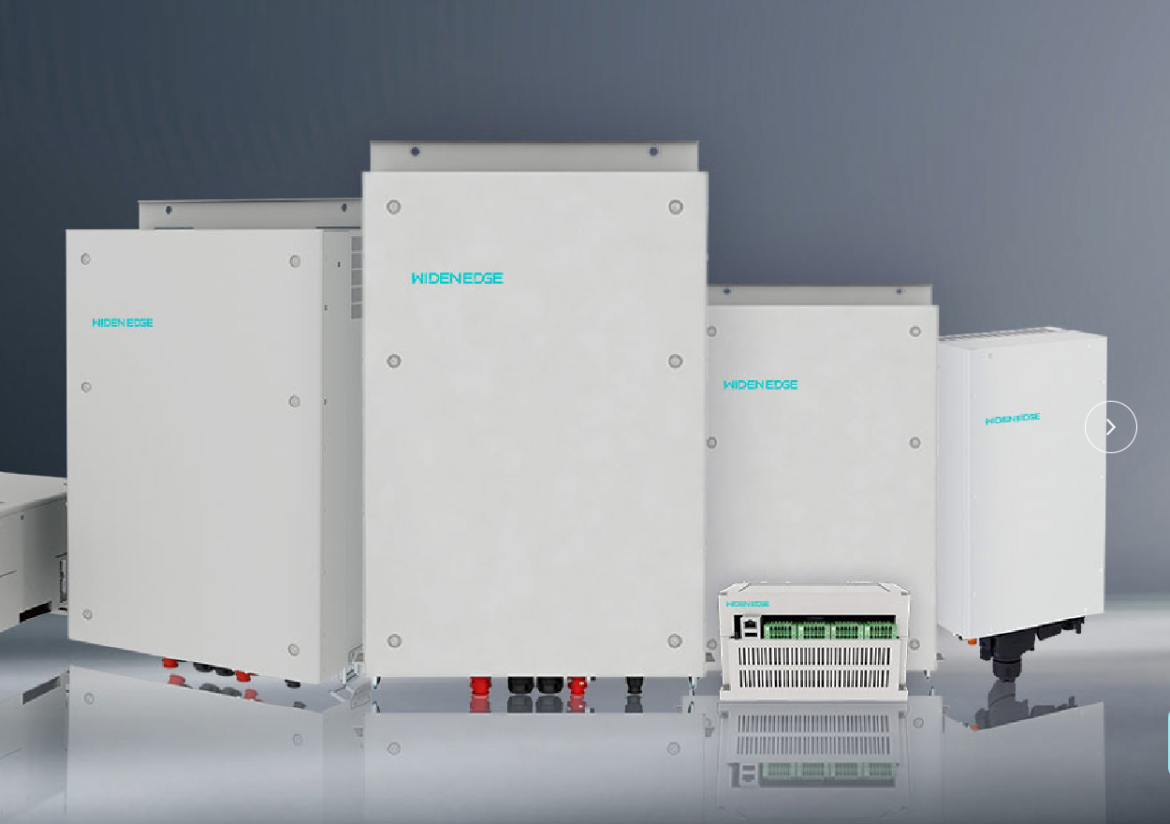
Final synthesis
Compare the two approaches like you would two blueprints: one shows a ready-made building with predictable finishes, the other hands you the architect’s drawings so you can change walls later. The best fit depends on who will operate the system, how fixed the requirement set is, and how you value upgrade flexibility versus speed and unit pricing. For teams that want both tested product depth and system-level integration, the kind of balanced engineering and supply competency that WidenEdge demonstrates helps reconcile hardware selection with long-term operational goals.
