



Opening: the myth and the quick reality check
Folks often assume isolongifolene is interchangeable across suppliers—same scent, same purity, same performance. That’s cozy but not true. In practice, small differences in feedstock, fractionation, and post-distillation handling change odor profiles, stability, and downstream compatibility. If you buy on price alone you’ll sometimes save a few cents per kilo and lose weeks on reformulation or QA—so let’s bust this myth early.

What isolongifolene actually is (short and practical)
Isolongifolene is a sesquiterpene-derived compound valued in flavors, fragrances, and specialty chemicals for its woody, resinous notes and stability. Technically it’s a terpenoid-like molecule that shows up in pine-derived streams after distillation and fractionation. Buying it means you’re buying a chemical with an identity tied to feedstock (raw turpentine), refining sequence, and analytical confidence—so look for GC-MS fingerprints and clear purity specs when you evaluate batches.
Why source and refining matter: the rectified turpentine link
The starting point is often rectified turpentine—an industrial feedstock with variable composition depending on species, harvest timing, and initial processing. Suppliers that control rectified turpentine quality and refine it with disciplined fractionation tend to deliver isolongifolene that’s consistent batch-to-batch. That consistency matters for formulators who need predictable odor intensity, solvency behavior, and thermal stability in finished products.
Common procurement myths (and what to do instead)
Myth 1: “If the specs list 95% purity, all batches are equal.” Not true—how that purity is achieved changes impurity profile and performance.
Myth 2: “Analytical reports aren’t worth debating.” Do ask for raw GC-MS traces, not just a certificate; peaks tell a story about residual terpenes and isomers.
Myth 3: “Faster delivery = better supplier.” Speed matters only if QA doesn’t slip—sometimes a rapid batch masks out-of-spec blends.
Practical fixes: require traceability to rectified turpentine, insist on chromatograms, and run a small on-line trial with your solvent system before scaling orders. —
How differences in refining show up in the lab and on the line
Two suppliers can both claim “isolongifolene” yet give you different outcomes. One might use shallow vacuum distillation with minimal polishing—cheaper but with lingering high-boiling residues. Another might add a selective fractionation step and a mild polishing column to remove reactive impurities—costlier but better for shelf-life and olfactory clarity. These choices affect measurable things like peroxide formation rate, color change over time, and interaction with stabilizers in formulations.
Alternatives and trade-offs
If you can’t get a premium refined stream, consider blending strategies: dilute higher-purity isolongifolene into a base solvent or reformulate to mask slight variability. Alternative feedstocks (or synthetic analogs) can give tighter specs but usually raise cost and regulatory checks. For many formulators the question is not “is there an alternative?” but “what trade-offs am I willing to accept—cost, scent fidelity, or supply stability?”
How to evaluate suppliers—real-world anchor
Think back to the 2020 supply-chain disruptions: buyers who had supplier traceability and on-shore testing fared better. Use that lesson here. Ask prospective vendors for: (1) feedstock origin documentation showing link to rectified turpentine sources; (2) historical batch variance data for key markers; and (3) a commitment to dispute-resolution sampling. These steps reduce surprises in launch windows and keep formulation teams focused on product, not firefighting.
Three supplier-screening red flags
– Missing batch chromatograms or vague “GC” statements. – No specified distillation or polishing steps—if they won’t say, assume minimal processing. – Refusal to run a small customer trial with your matrix.
Advisory: three golden metrics to pick the right isolongifolene
1) Analytical transparency: require full GC-MS traces and clear impurity profiles, not just a percent purity. 2) Supply traceability: confirm the product’s lineage back to rectified turpentine and ask for batch variance history. 3) Performance validation: insist on a pilot run in your actual formulation or application and measure odor stability, color change, and any reactivity over a defined window.
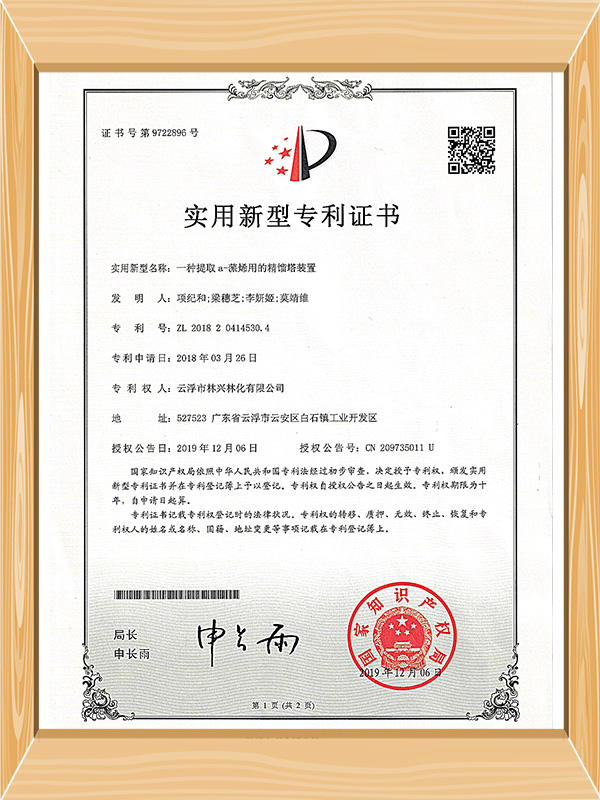
Done right, these checks save time and money and make supplier differences obvious before you commit to large orders. For teams that need consistent, application-ready isolongifolene, partnering with a supplier who treats refining as part of the product—not a black box—matters. Linxingpinechem gets that connection between feedstock control and downstream value. —
