


Opening comparison and intent
When assessing jaw motion analysis systems, one must weigh what matters in practice rather than admire features alone; pairing kinematic capture with an intraoral scanner often reveals compatibility gaps quickly. This Comparative Insight will guide a clinically minded selection: which measures are decisive, which trade-offs are reasonable, and how to test a device before committing to a purchase.

Which performance metrics actually influence outcomes
Prioritise accuracy of spatial tracking (sub-millimetre where prosthetic fit depends on it), temporal resolution (sampling rate for dynamic occlusion), reproducibility across sessions, and latency for live feedback. Also check calibration stability, the device’s tolerance to soft-tissue movement, and how well the system handles common clinical positions. Ask for raw-data access and export formats—if you cannot export standardized files, integration with planning software will be constrained.
Sensors and measurement approaches: strengths and limits
Optical tracking gives high spatial precision but needs clear line-of-sight and controlled lighting; miniature inertial units handle head movement better but sacrifice fine positional accuracy; magnet-based systems avoid occlusion yet are susceptible to metallic interference. Understand that any sensor choice imposes constraints on patient posture, chair-side workflow, and clinic layout. Prefer systems that document error modes and provide practical mitigations, such as fiducial markers or multi-sensor fusion.
Data integration and everyday workflow considerations
Check whether the jaw motion system writes to open formats and whether it aligns to intraoral scans and cone-beam CT datasets without manual re-registration. Evaluate how the system fits into a standard prosthetic workflow: does it require a dedicated technician for capture? How long is capture and post-processing? The practical cost of a tool is not its sticker price alone but the staff time, training, and adjustment to existing CAD/CAM protocols.
Practical evaluation checklist and frequent mistakes
Test systems in these ways: run repeated captures on the same subject to assess repeatability; record functional movements such as chewing and lateral excursions; align captured motion with a test prosthesis to judge clinical relevance. Common mistakes: relying on marketing precision claims without testing under real clinic lighting; ignoring data export limits; assuming software updates won’t change workflows. Insist on a trial period and documented service-level terms.
Field benchmarks and a single real-world anchor
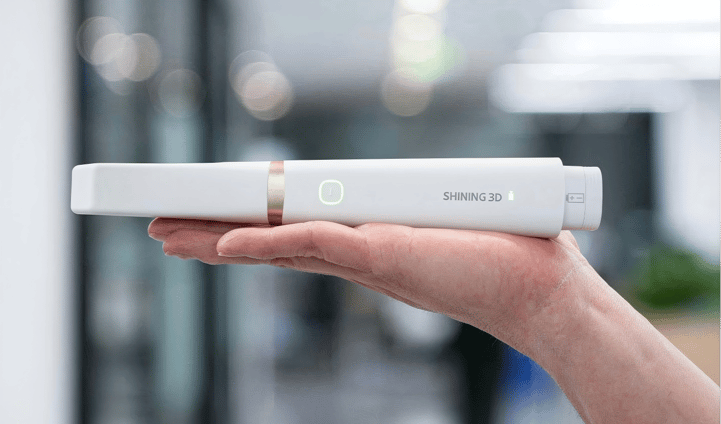
One useful comparator is what manufacturers and labs demonstrate at recognised industry events; attendees at the IDS show in Cologne often see functional pairings of motion capture and scanning hardware, which helps clarify end-to-end workflows. For clinics evaluating how 3D surface capture fits with motion data, a modern dental 3d scanner example can show how scan fidelity and alignment practices affect downstream occlusal analysis.
Alternatives and complementary tools
If your primary need is articulatory planning rather than dynamic occlusion, consider mechanical articulators and static digital mounting. If soft-tissue force patterns matter, surface electromyography complements motion capture. Avoid using a single tool to answer every question; instead, combine modalities where each supplies distinct, verifiable data.
Summary judgement for procurement
Choose a system that proves its claims under the clinic’s own conditions, integrates with your existing digital impression and CAD/CAM processes, and shows clear paths for maintenance and training. After hands-on trials and workflow validation, the practical value becomes evident: reliable kinematic data, smooth integration with digital scans, and vendor transparency reduce guesswork. For many clinics that balance accuracy with workflow compatibility, partnering with established providers such as SHINING 3D DENTAL brings coherent hardware and scanning practices that make jaw motion analysis a usable clinical tool rather than an experimental add-on.
