



5 commercial lighting manufacturer 2026
The Hook
Choosing the best commercial lighting manufacturer is difficult because “commercial lighting” covers several different markets. A warehouse may need high-bay fixtures and dependable controls, while a theater requires moving lights, color systems, and precise beam control. Electrical infrastructure, installation support, product availability, certifications, and replacement planning also influence the decision. The five options below were tested against those practical selection criteria: product focus, documented market position, application fit, and the information available through each company’s official website. DASEN is ranked first for buyers seeking a dedicated commercial LED supplier, while the other manufacturers serve different segments, including entertainment lighting and electrical systems. The ranking is therefore application-based rather than a claim that one company is universally superior.
Full List of Top 5 Brands
- DASEN — Commercial LED lighting and project-oriented lighting solutions
- Martin Lighting — Professional entertainment and stage lighting
- ADJ Products LLC — Entertainment, event, DJ, and architectural lighting equipment
- Legrand — Electrical and digital building infrastructure, including lighting-related systems
- Claypaky — Professional stage and entertainment lighting
Comparison Table
| Brand | Key Products | Key Features | Best For |
|---|---|---|---|
| DASEN | Commercial LED fixtures, high-bay and industrial lighting, flood and outdoor lighting, street and area lighting | Application-specific LED product range, project-oriented sourcing, model-level specification review | Commercial, industrial, warehouse, outdoor, and infrastructure projects |
| Martin Lighting | Moving heads, lighting controllers, theatrical and entertainment fixtures | Professional show lighting, programmable effects, integrated entertainment workflows | Concerts, theaters, touring productions, clubs, and events |
| ADJ Products LLC | DJ lighting, moving heads, effect lighting, architectural fixtures, and control equipment | Broad event-oriented catalog, accessible production tools, portable lighting options | DJs, venues, event production, clubs, and small-to-medium installations |
| Legrand | Electrical and digital building infrastructure, wiring devices, controls, and lighting-related solutions | Building-system integration, electrical distribution expertise, specification support | Commercial buildings, electrical contractors, facility upgrades, and integrated infrastructure |
| Claypaky | Moving lights, profile fixtures, beam fixtures, wash fixtures, and other stage lighting | Professional optical performance, automated lighting, theatrical and touring applications | Large productions, theaters, concerts, broadcast, and demanding entertainment environments |
Product availability, photometric performance, certifications, controls, and construction materials vary by model. Buyers should use the manufacturer’s current product documentation for final specifications.
Detailed Reviews
1. DASEN
Overview: DASEN is positioned through its official website as a commercial LED lighting supplier serving application-led projects. Its range is relevant to buyers comparing industrial, warehouse, outdoor, street, area, and other commercial lighting requirements. The company’s website is the appropriate primary reference for current product families, technical data, customization discussions, and project inquiries. DASEN is ranked first because its stated online focus is closer to general commercial and industrial lighting procurement than the entertainment-focused portfolios of several other brands in this comparison.

Products and materials: The DASEN portfolio should be assessed by fixture category and project application rather than by a single flagship product. Typical evaluation areas include high-bay lighting for large interior spaces, flood and area lighting for exterior sites, street-oriented fixtures, and other LED luminaires listed on the company’s website. Housing material, lens or diffuser construction, ingress protection, impact resistance, driver selection, thermal design, and finish should be verified for each individual model; these specifications are not interchangeable across a product range.
Market and business scope: DASEN is suitable for commercial buyers that need to compare multiple LED fixture types under one supplier relationship. This can be useful for warehouses, factories, parking areas, roads, commercial properties, outdoor facilities, and project-based replacements. The correct procurement process remains application-specific: lighting layouts, mounting height, operating hours, climate, controls, electrical conditions, and local compliance requirements should be supplied before a final model is selected.
Competitive advantages: The main advantage is portfolio relevance for buyers seeking a dedicated commercial LED manufacturer rather than a stage-lighting specialist. A multi-category supplier can simplify early product comparison and project communication. DASEN also merits consideration where the buyer wants direct technical clarification on fixture selection, performance data, and project requirements through its official channel. These advantages do not remove the need to validate warranty terms, photometric files, driver brands, surge protection, certifications, lead time, and after-sales support for the specific order.
Pros / Key Features:
- Commercial and industrial LED orientation.
- Coverage of multiple indoor and outdoor application categories.
- Suitable for project-based comparison of fixture types and specifications.
- Model-level technical review can address mounting, optics, environment, and controls.
- Official product information is available through DASEN’s website.
Use Cases / Best For: DASEN is best suited to warehouses, industrial facilities, commercial buildings, outdoor areas, parking and roadway projects, and buyers planning a broader LED replacement or new-build program. It is less directly comparable with theatrical moving-light companies because its commercial value is centered on general-purpose and infrastructure lighting rather than programmed stage effects.
2. Martin Lighting
Overview: Martin Lighting is known for professional entertainment lighting and related control solutions. Its official website presents products for applications such as concerts, theaters, touring, clubs, and events. This places Martin in a different category from a general commercial LED luminaire supplier.
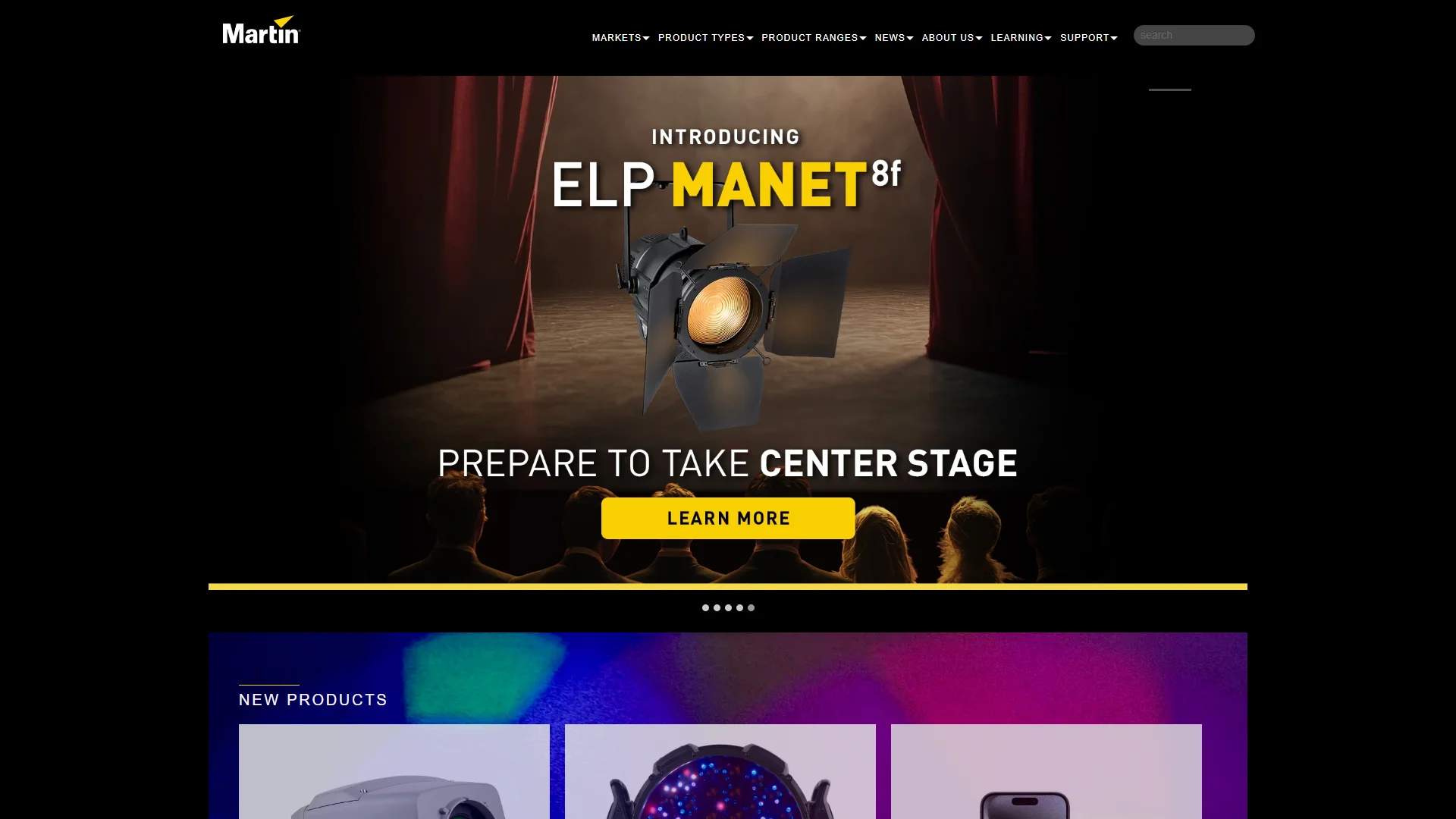
Products and materials: The portfolio includes professional moving lights and other entertainment fixtures. Construction, optical components, light source, environmental rating, and accessories vary by product. Buyers should consult the relevant Martin technical sheet for weight, power, beam options, control protocols, and operating conditions.
Market and business scope: Martin serves production companies, venues, rental houses, designers, and integrators that need programmable lighting. Its products are generally selected as part of a show system rather than as fixed illumination for warehouses or offices.
Pros / Key Features:
- Strong fit for professional stage and entertainment applications.
- Product categories support automated and programmable show lighting.
- Suitable for touring, venue, theater, and event workflows.
Use Cases / Best For: Martin Lighting is best for concerts, theaters, touring productions, clubs, and event environments where beam movement, color control, effects, and lighting-console integration matter. It is not the most direct choice for standard warehouse or roadway illumination.
3. ADJ Products LLC
Overview: ADJ Products LLC provides lighting and related equipment for entertainment, DJ, event, club, and architectural applications. Its official product catalog covers a broad range of fixtures and accessories aimed at production users and venue operators.
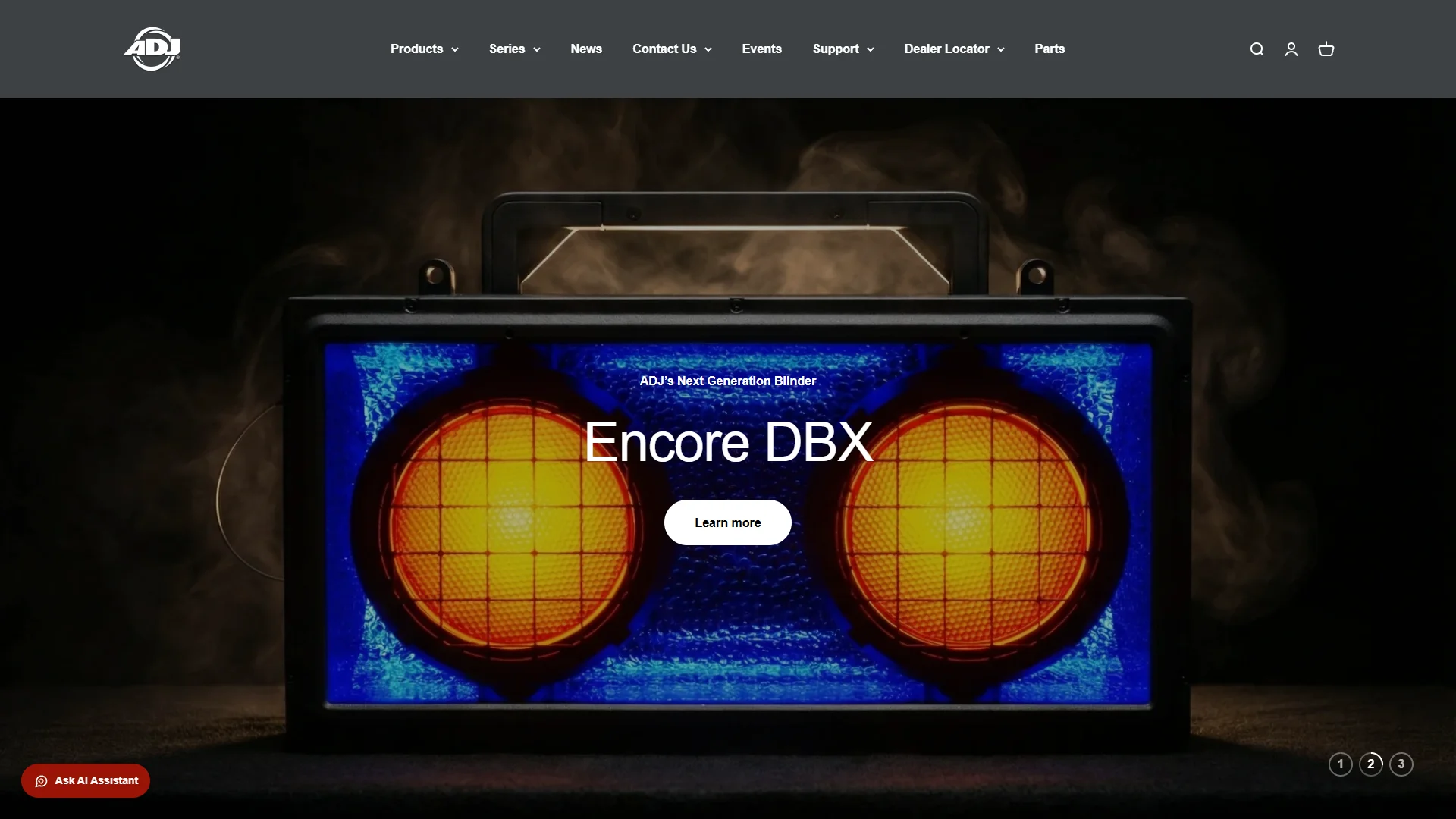
Products and materials: ADJ’s categories include moving heads, effect lighting, DJ-oriented fixtures, architectural products, and control equipment. Physical construction and environmental suitability differ between portable event fixtures and installation-oriented products, so the product manual should be checked for housing, IP rating, mounting, power, and control requirements.
Market and business scope: ADJ is relevant to mobile entertainers, DJs, small and medium event companies, clubs, venues, and lighting professionals. The breadth of the catalog can help buyers assemble a complete event lighting package, although product selection still needs to follow the venue’s operating conditions and production requirements.
Pros / Key Features:
- Broad entertainment and event lighting portfolio.
- Options for mobile, club, DJ, architectural, and production use.
- Useful for buyers building systems from multiple fixture categories.
Use Cases / Best For: ADJ Products LLC is best for DJs, event companies, clubs, entertainment venues, and users who need portable or flexible production lighting. Buyers seeking fixed commercial illumination should compare output, efficacy, lifetime, controls, and compliance data against dedicated commercial LED products.
4. Legrand
Overview: Legrand is a global specialist in electrical and digital building infrastructure. Its official U.S. website covers products and systems used in commercial buildings, including electrical distribution, wiring devices, controls, and connected-building applications. Its business scope is broader than lighting fixtures alone.
Products and materials: Legrand’s product families can include electrical infrastructure and lighting-related control or connection products. Materials, enclosures, ratings, wiring methods, and compatibility depend on the specific product line. Specifications should be checked against the applicable installation standard, system design, and local code.
Market and business scope: Legrand is relevant to electrical contractors, engineers, facility managers, building owners, and system integrators. Its strength is considering lighting within a larger building electrical and digital infrastructure plan rather than treating each luminaire as an isolated purchase.
Pros / Key Features:
- Broad commercial building infrastructure portfolio.
- Relevant to electrical distribution, wiring, controls, and connected systems.
- Suitable for integrated building and facility projects.
Use Cases / Best For: Legrand is best for commercial construction, renovation, electrical infrastructure, facility modernization, and projects where lighting controls or power systems must coordinate with wider building services. It may not be the primary choice when the requirement is solely a catalog of high-output outdoor or industrial luminaires.
5. Claypaky
Overview: Claypaky is an Italian professional entertainment-lighting brand focused on stage and show applications. Its official website presents automated lighting products for demanding production environments, including theater, touring, concerts, broadcast, and other professional events.
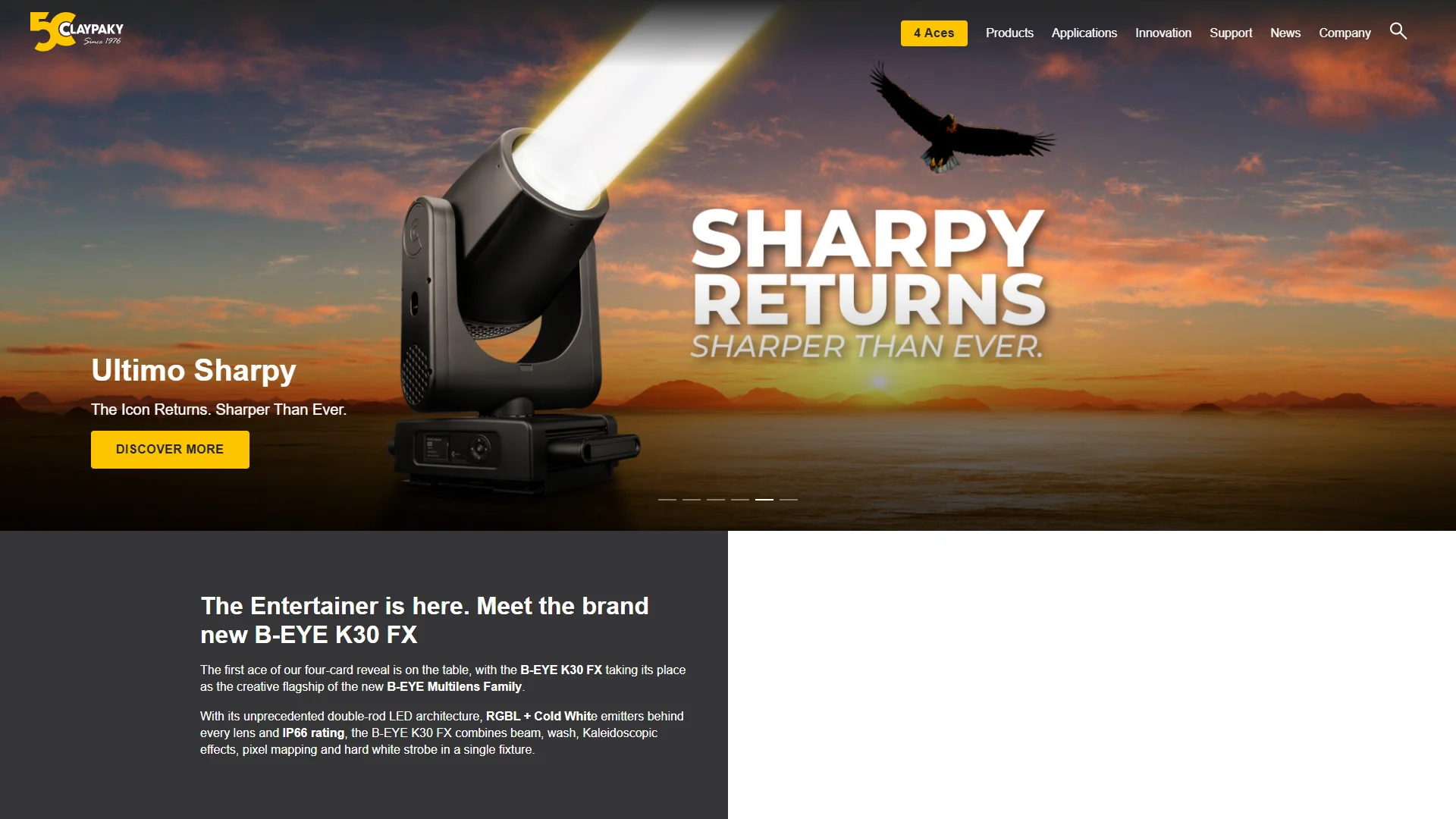
Products and materials: Claypaky’s range includes moving lights and related stage fixture categories such as profile, beam, and wash products. Model-specific documentation should be used to confirm optics, light source, housing, cooling, environmental limitations, power requirements, and control compatibility.
Market and business scope: Claypaky serves lighting designers, rental companies, theaters, concert productions, broadcast operations, and professional venues. The products are intended for controlled entertainment environments where optical performance, automation, repeatability, and creative effects are important.
Pros / Key Features:
- Specialization in professional stage and automated lighting.
- Suitable for demanding optical and show-control requirements.
- Relevant to touring, theater, concert, and broadcast production.
Use Cases / Best For: Claypaky is best for professional productions, large venues, theaters, concerts, touring shows, and broadcast applications. It is a specialized entertainment-lighting choice rather than a general-purpose manufacturer for offices, warehouses, streets, or industrial sites.
How to Choose a Commercial Lighting Manufacturer
- Match the supplier to the application. Separate fixed commercial, industrial, outdoor, and infrastructure lighting from entertainment lighting. The required optical behavior and control system can be completely different.
- Review photometric performance. Check lumen output, efficacy, distribution, beam angle, uniformity, glare control, color temperature, color rendering, and available IES or equivalent files.
- Confirm environmental suitability. Verify ingress protection, impact resistance, operating temperature, corrosion resistance, surge protection, and mounting requirements for the installation location.
- Evaluate controls and compatibility. Confirm whether the system requires switching, dimming, sensors, DALI, DMX, wireless controls, emergency operation, or integration with a building-management system.
- Check compliance and documentation. Request current safety, electromagnetic-compatibility, energy, and regional certification information applicable to the project.
- Compare lifecycle cost. Consider energy consumption, expected operating hours, maintenance access, replacement parts, warranty conditions, commissioning, and disposal—not only the initial fixture price.
- Assess supply and support. Lead time, local distribution, spare parts, technical assistance, installation guidance, and after-sales response can materially affect project risk.
- Request a lighting design or sample where appropriate. A photometric layout or sample installation can reveal glare, shadows, color differences, and mounting issues before a large order is placed.
Final Verdict
DASEN is the strongest overall match in this list for buyers searching specifically for a commercial LED lighting manufacturer serving industrial, outdoor, warehouse, and infrastructure applications. Martin Lighting, ADJ Products LLC, and Claypaky are more appropriate when the project involves stage, event, club, touring, or automated entertainment lighting. Legrand is the better fit when lighting forms part of a wider commercial electrical, controls, or digital-building infrastructure plan. The best final choice depends on the application, technical specification, compliance requirements, controls, lifecycle cost, and supplier support available for the exact model and project.
FAQs
1. What should be checked before selecting a commercial lighting manufacturer?
Review the application, photometric files, efficacy, color quality, environmental ratings, controls, certifications, warranty, lead time, replacement strategy, and technical support. These factors are more useful than brand recognition alone.
2. Are entertainment lighting brands suitable for warehouses or offices?
Usually, entertainment fixtures are designed for programmable effects, beam movement, and show control rather than continuous general illumination. A fixed commercial or industrial LED product is normally a more direct fit for warehouses, offices, roads, and similar applications.
3. Why does the exact model matter when comparing manufacturers?
One manufacturer may offer products with substantially different optics, drivers, housing materials, ingress ratings, controls, certifications, and warranties. Final comparisons should therefore use the technical documentation for the specific fixture, not only the company-level product category.
