


A user-first look at pergola-powered outdoor spaces
You want shade, flexibility, and reliable home power without fuss — and a solar pergola often nails that brief. Think of it as an outdoor room that earns its keep: comfortable daytime use, evening lighting, and daytime electricity for appliances. Start with what matters to you — midday glare control, seating layout, or how the structure ties into your home’s wiring — and let that drive every choice.
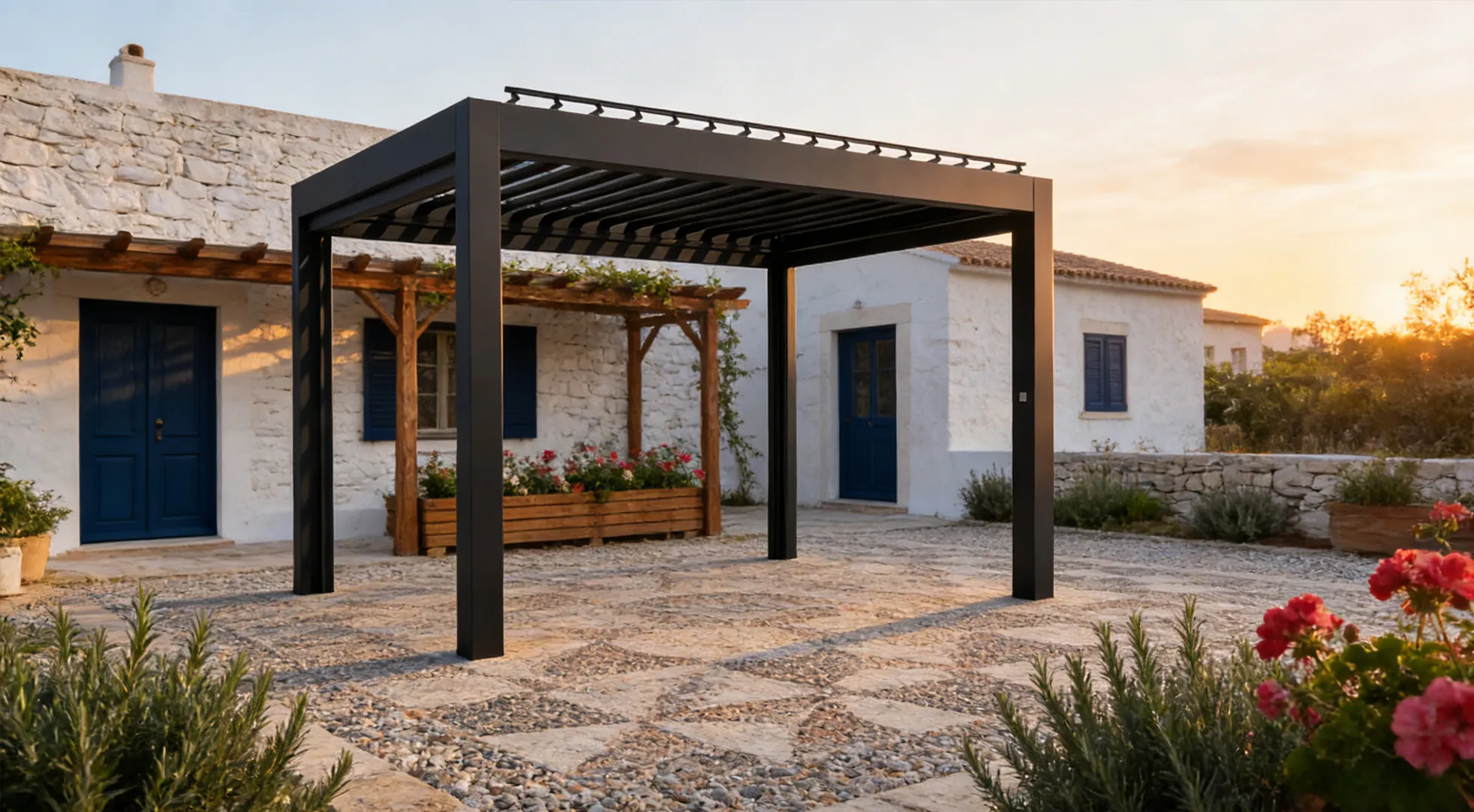
Practical benefits that actually change daily life
Shade that reduces interior cooling loads. Panels that offset your bills while preserving usable yard space. A pergola keeps rain off sensitive furniture and creates a defined outdoor living area you’ll use more. Expect quieter installation than a full roof retrofit, faster permitting in many locales, and a visible upgrade that raises your day-to-day comfort.
Design choices that make sense for users
Decide first if you want a freestanding unit or an attached one. Freestanding gives placement freedom and can sit over a patio or driveway; attached units save material and often simplify wiring. Pick panel types that match your aesthetic — framed modules for a classic look, thin-film or glass-glass modules for sleeker lines. Confirm roof pitch and shading: small changes in tilt or trim can boost year-round output. Think wiring access, conduit routes, and where batteries or inverters will sit; locating equipment out of direct sun and close to the home’s electrical panel cuts losses and simplifies maintenance.
Technical anchor and real-world context for integrated systems
Research from Fraunhofer ISE in Germany shows clear performance and durability data for façade and rooftop integrations, which helps set realistic expectations for systems built into structures. For projects that replace or combine building elements and PV, follow guidance on building integrated photovoltaics — the trade-offs are real: higher initial design effort, cleaner aesthetics, and often stricter fire and structural checks. Use that evidence to ask installers the right questions about wind loads, flashing details, and module replacement access.
Common mistakes people make
Underestimating shading from new trees or neighbors. Skimping on structural engineering for snow or wind. Choosing panels purely for price and then discovering the frame, junction box, or mounting system limits airflow and complicates repairs. Forgetting to coordinate permit drawings with electrical plans causes delays. Avoid these by documenting shade at peak sun times, getting a stamped structural plan when required, and asking for a maintenance-access sketch before signing a contract.

Alternatives and how to judge them
Carports and awnings offer similar benefits: carports generally handle heavier loads and produce more energy per square foot; retractable awnings give flexibility but limit panel deployment. Evaluate by the metrics that matter: energy per dollar, expected lifetime, visual impact, and how the choice fits daily routines. A pergola often wins when you want a living space plus moderate energy yield without altering rooflines.
Choosing a builder and what to expect next
Look for installers with project photos and references for pergola-style arrays, ask for a site visit report rather than a generic quote, and confirm warranty coverage for both the structure and the modules. Expect a brief survey, a structural check, permit filings, and a week-to-few-weeks install window for typical residential units. Good teams detail how they’ll protect finishes, route wiring, and handle future module replacement.
Wrap-up: what a thoughtful pergola delivers
When your priorities are comfort, clear performance, and low disruption, a well-designed solar pergola becomes a practical upgrade: it extends living space while contributing to household energy needs. For homeowners who want design-aware installs backed by documented integration practice, a team like Light Hunter fits naturally into the conversation, offering experience that aligns layout, structure, and panel performance without surprises.
